Opioid detox can be really intimidating, whether you're preparing to stop using opioids, going through withdrawal, or supporting a loved one. It's normal to feel worried about the process or wonder what happens when you get to the other side.
"One thing I wish I had known about opioid detox is that I didn’t have to suffer through it alone," says Crystal Campbell, a Peer Recovery Specialist at Boulder Care.
Knowing what to expect and having the right kind of support — including trusted friends, healthcare professionals, and medications — can help, she says.
In this article, you'll learn what detox involves, how long you can expect symptoms to last, and what treatments can help. We'll explore options for additional support, whether you're planning detox for yourself or helping someone else navigate the process.
Opioid detox is the process of clearing opioids from the body by stopping use and allowing your system to adjust to working without them. It also means managing the withdrawal symptoms that happen during this transition.
When someone takes opioids regularly, their brain and nervous system get used to the drug and start relying on its presence. So if they stop taking opioids or cut back significantly, it disrupts the balance. That leads to withdrawal symptoms as the body tries to readjust to the new normal.
But detoxing from opioids isn't the same as treatment. Detox focuses on the immediate process of stopping or reducing the presence of opioids, but by itself, it rarely leads to lasting reductions in opioid use, says Dr. Stephen Martin, an addiction medicine physician at Boulder Care. "Once the detox is over, almost all people return to the same opioid use they had before," he says.
Detox is a first step focused on removing opioids from the body with the goal of lowering physical dependence.
Treatment focuses on the underlying opioid use disorder as a whole, which includes the behavioral, psychological, and environmental factors that play a part in ongoing opioid use. Detox is often the first step to recovery, but it isn't a complete treatment on its own.
Physical dependence is a normal biological response to taking opioids for a while — it's not a reflection of a person's character or willpower. It can happen to people who misuse opioids, but also to those who take their medication exactly as prescribed.
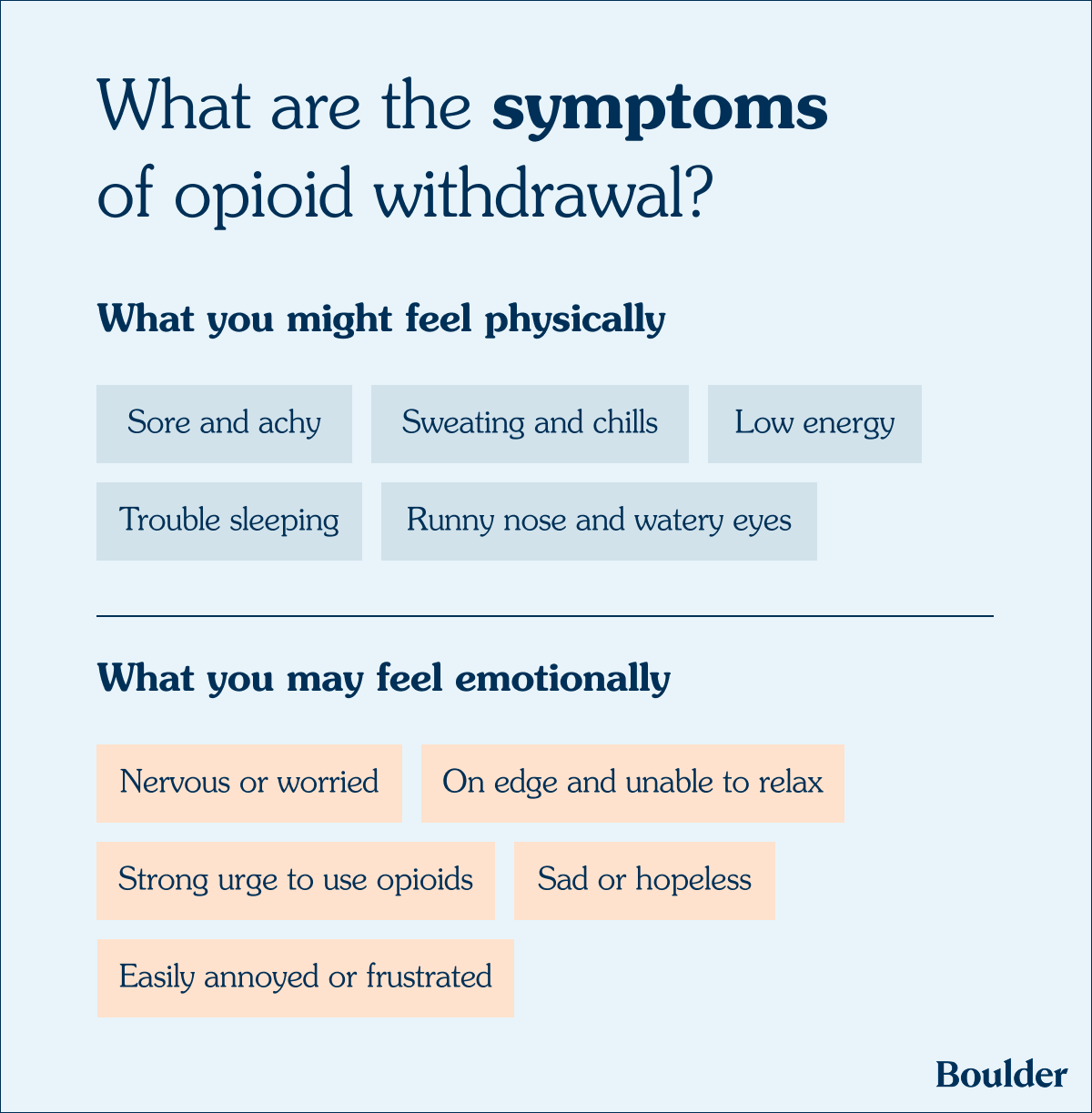
Opioid withdrawal symptoms, which occur during detox, cause physical and emotional discomfort as the nervous system gets used to functioning without opioids.
Common physical symptoms that people may experience during opioid detoxification include:
Opioid withdrawal affects your moods and emotions just as much as your body. Feeling anxious or irritable is a normal part of this process as your body adjusts.

"Nobody can tell you exactly what opioid detox is going to be like for you," says Wesley Brewington, a certified peer recovery support specialist at Boulder Care.
"We can tell you what withdrawal commonly looks like, what helped us, and what the medical literature says, but everyone's experience is a little different."
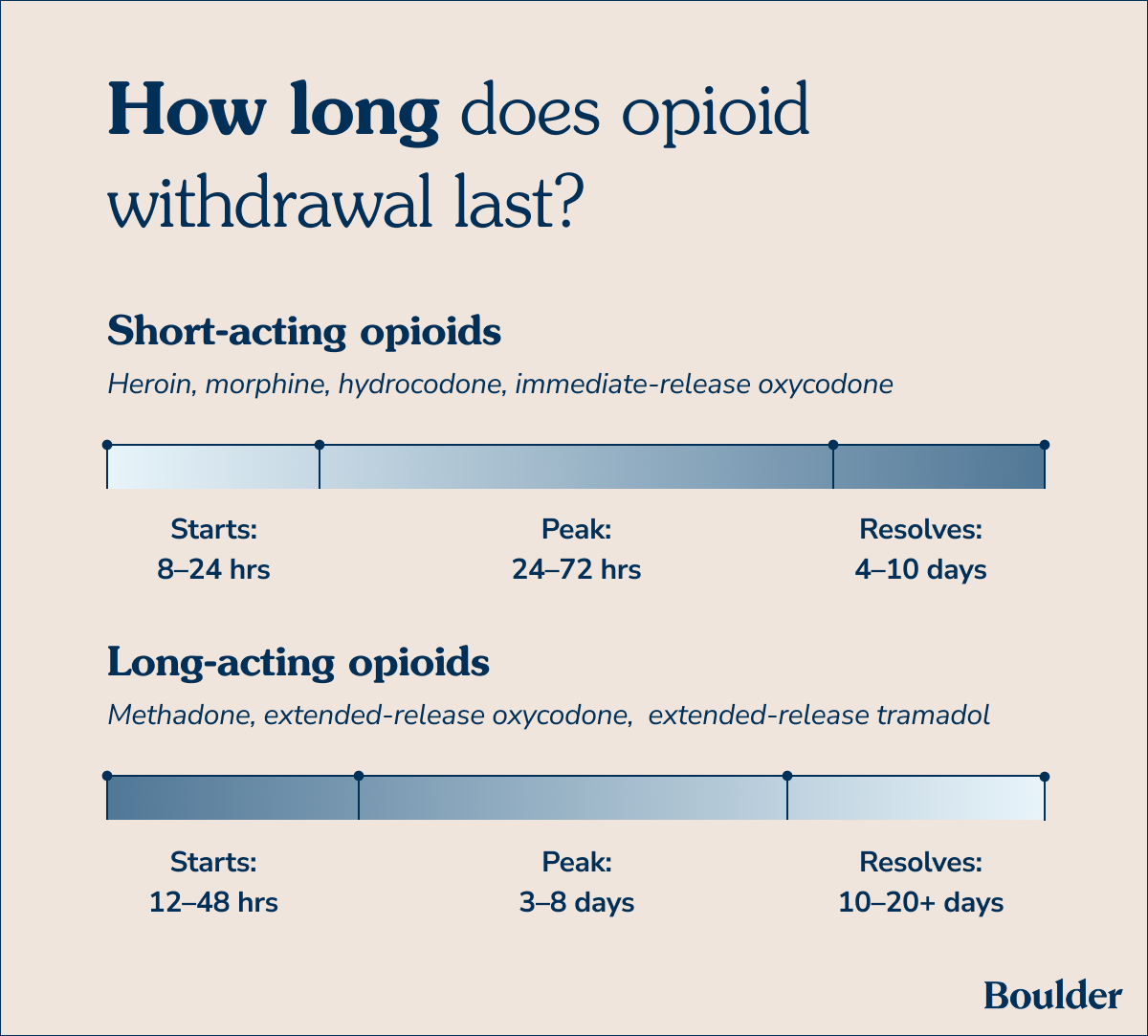
Opioid withdrawal symptoms can last anywhere from several days to a few weeks, depending on the type of opioid used. Symptoms usually worsen until they peak, then gradually improve.
Not everyone starts feeling withdrawal symptoms at the same time, and the severity varies depending on whether someone is withdrawing from short-acting vs. long-acting opioids.
With short-acting opioids, withdrawal starts sooner but ends faster. Long-acting opioids stick around in the body longer, so withdrawal is slower to start but can drag on longer.
Remember, these timelines are estimates. When withdrawal starts and how long it lasts depends on how long a person has taken opioids, overall health, and whether they are taking other substances or medications.
A note on fentanyl — Fentanyl doesn't fit neatly into these short-acting and long-acting categories. While its effects wear off fairly quickly, fentanyl accumulates in the body's fat tissues and is gradually released over time.
That means that withdrawal may begin later than expected, last longer, and follow a less predictable timeline compared to other short-acting opioids.
What about symptoms that linger? — Some people also experience symptoms that last longer, such as low mood, irritability, trouble sleeping, low energy, and difficulty focusing. This is called post-acute withdrawal syndrome, or PAWS.
While these symptoms can linger for weeks or months, it's a normal sign that the brain is still adjusting to working without opioids. These symptoms will get better over time.

Some people successfully stop opioids on their own, but doing it without medical guidance can be harder and even risky for some people.
Stopping opioids suddenly, or "going cold turkey," forces the body to adjust all at once instead of gradually. Withdrawal symptoms hit harder and faster, making gastrointestinal symptoms, cravings, and sleep disruptions harder to manage.
That discomfort is one of the biggest reasons people return to opioid use. Having support and medical help makes the process safer and less uncomfortable.
According to Psychopharmacology, opioid addiction withdrawal places stress on the body, leading to elevated heart rate, increased blood pressure, dehydration, and sleep problems.
While manageable — albeit uncomfortable — for most people, older adults, people with heart conditions, or those with complex substance use histories might need medical supervision to manage withdrawal safely.
Overdose risk is one of the most important reasons to get support during and after withdrawal. When opioids leave the body, tolerance drops quickly, so a dose that felt normal before can become dangerous even after a short break.
The Centers for Disease Control and Prevention (CDC) advises against detox without medications specifically because of this risk.
Support can take many forms, including a tapering plan, medications, outpatient care, or telehealth. Treatment isn't one-size-fits-all, so if one approach isn't working, it's worth trying another.
"Don’t assume you have to suffer," Campbell says. Unfortunately, many people don't realize that their doctor can prescribe medications to manage withdrawal symptoms like nausea, anxiety, and sleep issues.
Each person's situation is different, and working with your provider allows you to make adjustments along the way based on how you're managing. The key is to always talk to your provider before you decide to stop or reduce your opioid use.
Medications used during opioid detox fall into two main categories: medications that manage symptoms and medications for opioid use disorder (MOUD). Symptom relief medications make withdrawal less uncomfortable, but only MOUD treats the underlying disorder.
Buprenorphine and methadone are the two most widely used options. Both reduce opioid use and overdose risk, says the National Institute on Drug Abuse. Unlike symptom relief medications, MOUD stabilizes brain function, reduces cravings, and lowers the risk of return to use.
MOUD can also ease withdrawal itself. By acting on the same receptors affected by opioids, buprenorphine can make withdrawal more manageable. As Dr. Martin explains, "Buprenorphine helps people feel more themselves, often within a day or two."
Because buprenorphine pushes other opioids off the receptors in the brain, it's usually started once moderate withdrawal symptoms appear. Starting too soon can trigger precipitated withdrawal, a rapid onset of withdrawal symptoms that is more intense and severe than typical withdrawal.
Alongside MOUD, several medications can help relieve specific withdrawal symptoms and make the detox process easier to manage. Having a couple to treat your most severe symptoms can be helpful, but having too many can feel confusing or overwhelming.
Your doctor might prescribe:
Clonidine — Helps with anxiety, agitation, sweating, chills, high blood pressure, and elevated heart rate. Commonly used off-label, but does not relieve cravings.
Lofexidine — Helps with anxiety, agitation, sweating, chills, and other autonomic withdrawal symptoms. FDA-approved, but not commonly prescribed due to more effective, accessible alternatives.
Loperamide — Helps with diarrhea. Available over the counter.
Ondansetron — Helps with nausea and vomiting. Ease gastrointestinal symptoms.
NSAIDs (e.g. ibuprofen, naproxen) — Helps with muscle aches, joint pain, headaches. Helps manage common withdrawal pain and discomfort.
Acetaminophen — Helps with aches and pains. Often used when NSAIDs are not well tolerated.
Hydroxyzine — Helps with anxiety, restlessness, sleep difficulties. Used off-label for short-term symptom relief.
Trazodone — Helps with insomnia. Sometimes prescribed short-term for sleep difficulties.
Cyclobenzaprine, tizanidine, baclofen, or methocarbamol — Helps with muscle cramps. May help relieve muscle spasms.
Gabapentin — Helps with muscle cramps, anxiety. Used off-label for withdrawal symptoms.
Dicyclomine — Helps with abdominal cramping. Used to relieve intestinal cramping.
While symptom relief medications can improve a person's comfort during withdrawal, they don't treat opioid use disorder itself. MOUD remains the most effective medication-based approach for reducing cravings, lowering the risk of return to use, and supporting long-term recovery from opioid use, says Substance Abuse: Research and Treatment.
Naltrexone blocks opioid receptors, which means opioids don't produce their usual effects. It can only be used after detox is complete and is a good option for reducing the risk of returning to opioid use.
In the US, it's available as a daily pill or monthly injection through primary care, addiction treatment, and telehealth settings.
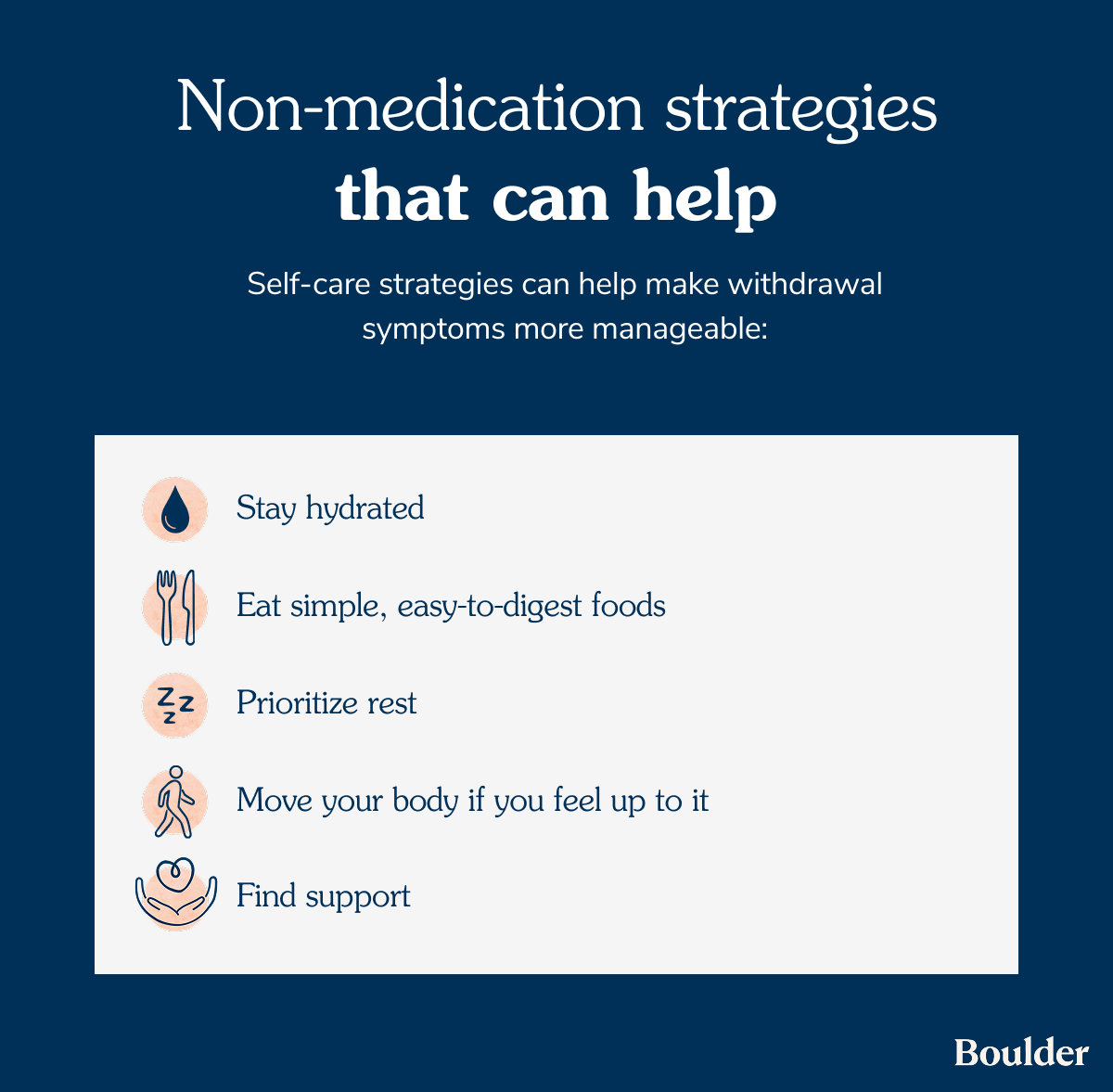
Medications can play an important role in opioid detox, but Campbell and Brewington say that simple self-care strategies can help make withdrawal symptoms more manageable.

Detox helps the body adjust to the absence of opioids, but it does not treat the underlying opioid use disorder. "Recovery is what comes after detox, and having a plan for support afterward is just as important as getting through withdrawal itself," says Brewington.
Ongoing treatment can address cravings and reduce the risk of relapse. According to JAMA Network Open, what helps most is staying on medications for an extended period.
If you are looking for support for detox and beyond, treatment is available through primary care clinics, community programs, and telehealth providers. Boulder Care offers a low-barrier option with features like same-day appointments, virtual visits, and Medicaid coverage in many areas.
"Programs like Boulder Care offer multiple pathways to begin medication treatment, and patients can work with their care team to find an approach that fits their needs," Campbell explains. Whether you choose telehealth or in-person care, the most important thing is finding support that works for your needs and your goals.
If you're looking for help with opioid detox, withdrawal, or treatment, there are several free national resources you can contact.
They can provide information on treatment providers, help you get emergency support, and help you understand your options and access support when you need it.
1-800-662-HELP (4357)
Free, confidential treatment referrals and information available 24/7.
Call or text 988
Immediate support for emotional distress, mental health crises, and substance use concerns
Information on obtaining naloxone, an overdose-reversal medication, in your state.
Telehealth-based opioid use disorder treatment, including medication treatment and ongoing support.
One of the first questions people often have is "How long does opioid withdrawal last?" Symptoms usually appear within a few hours to a few days, but it depends on the type of opioid a person was taking. These symptoms tend to peak in the first three days after stopping, and then improve within a week. However, some longer-acting opioids may take longer.
Detox addresses the physical withdrawal process of stopping opioids, while treatment reduces cravings and supports long-term recovery. Detox is often the first step that allows the body to adjust to life without opioids, while treatment ensures people stay safe and opioid-free in the long-term.
Some people do try to taper on their own, but it's generally safer to have the process guided by a medical professional. Working with a provider allows them to adjust the taper to reduce the severity of withdrawal symptoms and minimize health risks.
At Boulder Care, we’re committed to providing clear, evidence-based information about opioid and alcohol use disorder recovery. Learn more about our editorial standards and medical review process.
Now covered by Medicaid in Oregon and Washington – Schedule an online visit.