

Table of Contents
Published:
|
Last Updated:
June 18, 2026
You've got people now.


As you or a loved one may have experienced, when you stop taking opioids, your body says, "Hey! I need MORE" and when it doesn't get it, withdrawal kicks in. Opioid withdrawal symptoms can be one of the most difficult parts of recovery.
When Crystal Campbell, a Peer recovery specialist at Boulder Care, finally went through withdrawal, her symptoms were severe: "I had an upset stomach, diarrhea, and severe stomach cramping. I was sweating constantly, but it felt different—like a slimy sweat—and I noticed a strong, rotten smell coming from my pores. I had a slimy feeling in my mouth, uncontrollable yawning, watery eyes, and a constantly runny nose." She also experienced leg and back pain, extreme anxiety, and high blood pressure.
These debilitating symptoms, along with strong cravings, are part of why substance use disorders are so complicated. Opioid use changes the brain and affects areas related to motivation, reward, memory, and everyday functioning. Your brain comes to expect and rely on the opioid. When it doesn’t get it, it understandably panics.
Stopping an opioid is a big change the body needs to get used to. Opioid withdrawal symptoms are the body’s way of trying to find its “new normal” without the opioid it’s become accustomed to having. But it can find its new state of balance without the opioid eventually. And tools are available to help ease symptoms and cravings.
As Campbell puts it, "Withdrawal does not last forever, even though it feels like it will." Below, we explore opioid withdrawal symptoms, how long they last, and ways to manage them.
Before opioid use, your brain, or that of a loved one, maintains a general sense of balance. It does this by responding to the body’s own signaling processes.
Think of this balance as a regulation of the nervous system. It’s also a balance between chemical messengers that calm the brain and those that excite it. And we all have a natural built-in opioid system to ease pain, support our stress response, motivate us, and more. Chronic opioid use upsets this delicate balance that the brain is used to managing on its own.
“Opioids work by attaching to tiny docking sites in the brain called opioid receptors,” says Patricia Pechter, MD, a collaborating physician with Boulder Care. “When those receptors are occupied, they send signals that reduce pain and create a sense of calm or relief.”
Over time with opioid use, your brain adjusts to those new signals. “It dials down some of its own natural calming chemicals and builds a new ‘normal’ that assumes opioids will be present,” Dr. Pechter explains.
If you suddenly take away the opioid signals that your brain has recalibrated to, it flounders. “Withdrawal happens when those receptors suddenly lose the drug that’s been sitting on them,” Dr. Pechter adds. “The nervous system swings into overdrive. That surge of activity is what produces withdrawal symptoms such as sweating, restlessness, nausea, muscle aches, and intense cravings.”
Opioid cravings are a survival mechanism. But so are withdrawal symptoms. “The brain reshapes itself around powerful signals like opioids and then slowly reshapes itself again once those signals change,” Dr. Pechter says. “The body is incredibly adaptive. Withdrawal is essentially the brain’s recalibration phase. It’s unpleasant, but also evidence of a nervous system working very hard to regain balance.”
You might be wondering what to expect with opioid withdrawal if you, or someone you care about, is going through it. When does withdrawal begin? And how long do opioid withdrawal symptoms last?
The timing is a bit different based on the specific opioid, Dr. Pechter says. This is because of differences in how long an opioid takes to leave your system.
“Some opioids leave the body fairly quickly,” she says. “When those are involved, withdrawal symptoms can begin within hours of the last use. Others stick around longer, which delays the start of withdrawal symptoms.”
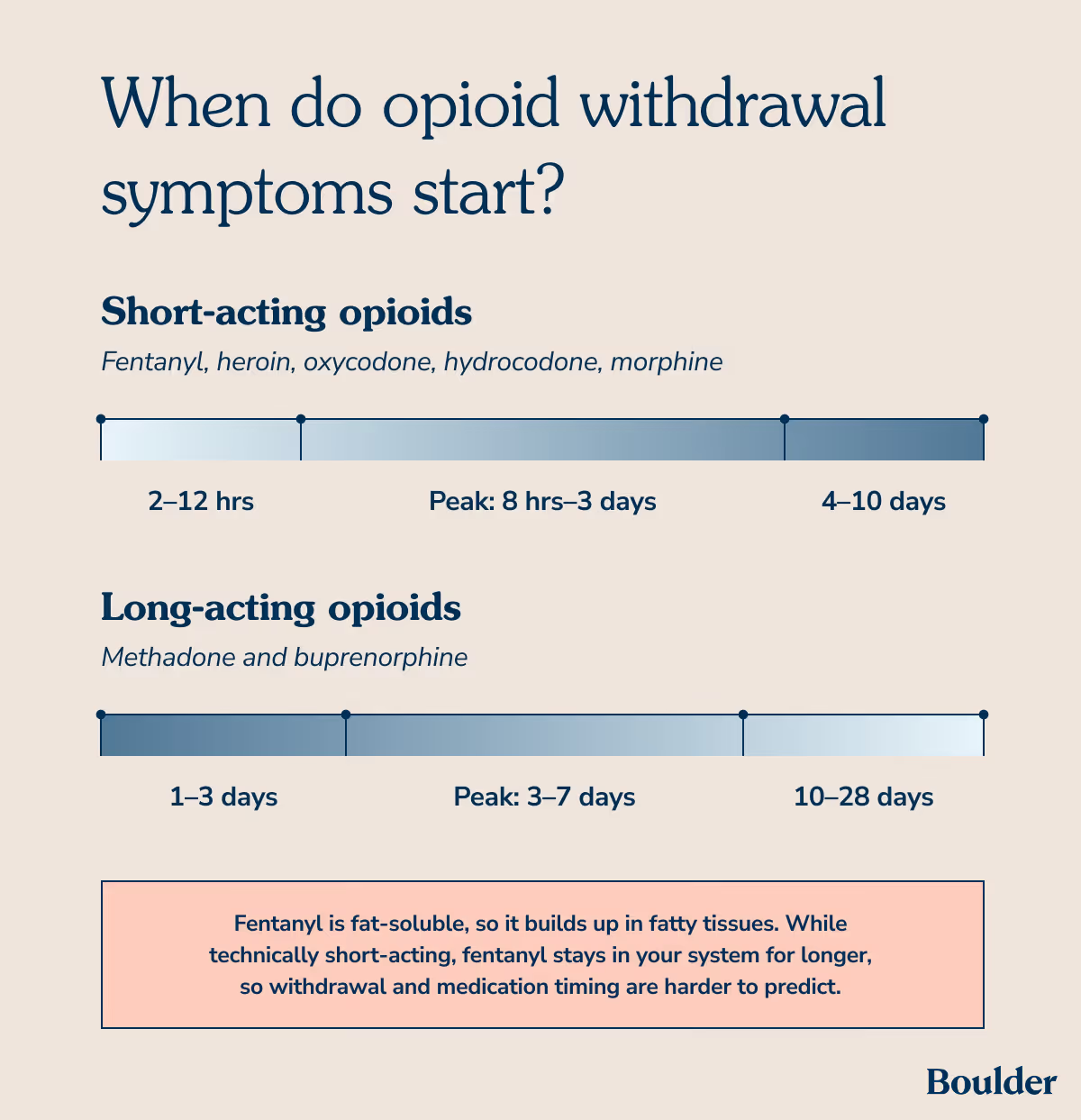
Heroin, for example, is a short-acting opioid. It leaves the body quickly. So symptoms might begin within a few hours. However, symptoms also resolve faster compared to long- acting opioids.
Methadone, on the other hand, is an example of a long-acting opioid. Withdrawal symptoms take a bit longer to show up. But withdrawal then lasts longer.
Opioid withdrawal symptoms timeline:
You’ll find more below on which symptoms are associated with opioid withdrawal across the different phases.
Opioid withdrawal starts with some early physical symptoms that progress to a peak when symptoms are most intense. After that peak, symptoms generally begin to ease.
After the acute phase of withdrawal, some symptoms can linger. Lingering symptoms are called post-acute withdrawal syndrome (PAWS). Another term is protracted withdrawal.
“These symptoms are less about physical illness and more about the brain slowly rebalancing itself,” Dr. Pechter says. “The brain is relearning how to regulate mood, sleep, and stress without opioids. PAWS can last for months, and sometimes longer, but symptoms usually fade gradually as the brain’s chemistry stabilizes.”
Below, we’ve categorized these symptoms based on the phase in which they usually show up.
The short answer is that opioid withdrawal can be dangerous in certain circumstances. But Dr. Pechter says many people can manage opioid withdrawal safely at home with the right support. This is especially true when medications are used to help control symptoms.
However, she notes a concern with an unexpected substance that sometimes shows up in the drug supply: medetomidine. It is an anesthetic used in veterinary medicine and is therefore sedating. Medetomidine can also make opioid withdrawal much more severe. The drug has been linked to dangerous heart rate and blood pressure spikes, along with mental health concerns, such as confusion and agitation.
“In one report from emergency departments in Philadelphia,” Dr. Petcher says, “many patients experiencing this type of withdrawal required intensive care, and some needed breathing support. Because the drug supply can be unpredictable, medical supervision becomes especially important if symptoms feel extreme or unusual.”
If you are in the throes of severe opioid withdrawal symptoms, never hesitate to seek medical attention.
Precipitated withdrawal is a different type of withdrawal from what happens when you stop opioids. It occurs when another opioid kicks the original opioid off its receptor, causing sudden and intense withdrawal symptoms. Precipitated withdrawal can happen as part of treatment for OUD.
Medications for opioid use disorder (MOUD) include long-acting opioids, such as buprenorphine. Buprenorphine is used to treat OUD. However, starting MOUD treatment too early during withdrawal can lead to the side effect of precipitated withdrawal, causing rapid symptoms.
“Many people describe precipitated withdrawal as the body hitting the withdrawal ‘fast forward’ button,” Dr. Pechter says.
If buprenorphine enters the picture while the receptors are still occupied, the medication takes over. It replaces the opioid currently occupying them.
“Buprenorphine binds very tightly to opioid receptors and stays there for a long time,” Dr. Pechter adds. “Once enough receptors are occupied by it, the nervous system settles down and withdrawal symptoms fade.”
To avoid precipitated withdrawal, one tactic is to wait at least 24 hours from the last opioid use before starting buprenorphine or another long-acting opioid. This allows time for the original opioid to leave opioid receptors. But delaying the start is just one option.
This is why you'll need to talk to your clinician about the right transition strategy for you. Essentially, you or your loved one can choose how withdrawal might unfold: swiftly or slowly.
MOUDs, such as buprenorphine, are one of the most effective tools for easing withdrawal symptoms for the long haul.
Buprenorphine is one of the active ingredients in Suboxone, which Campbell says helped her the most. “When I was able to take it appropriately, it took away my withdrawal symptoms entirely. Nothing else I tried worked the way Suboxone did.”
Dr. Pechter explains, “Buprenorphine attaches very tightly to opioid receptors. Once enough of those receptors are occupied, the brain stops swinging between ‘opioid present’ and ‘opioid gone.’ That steady signal allows the nervous system to calm down and withdrawal symptoms to fade.”
The steady signal essentially helps return the brain to a sense of balance, which helps stabilize you or a loved one during recovery.
Boulder Care always encourages working with a peer recovery specialist when transitioning onto buprenorphine.
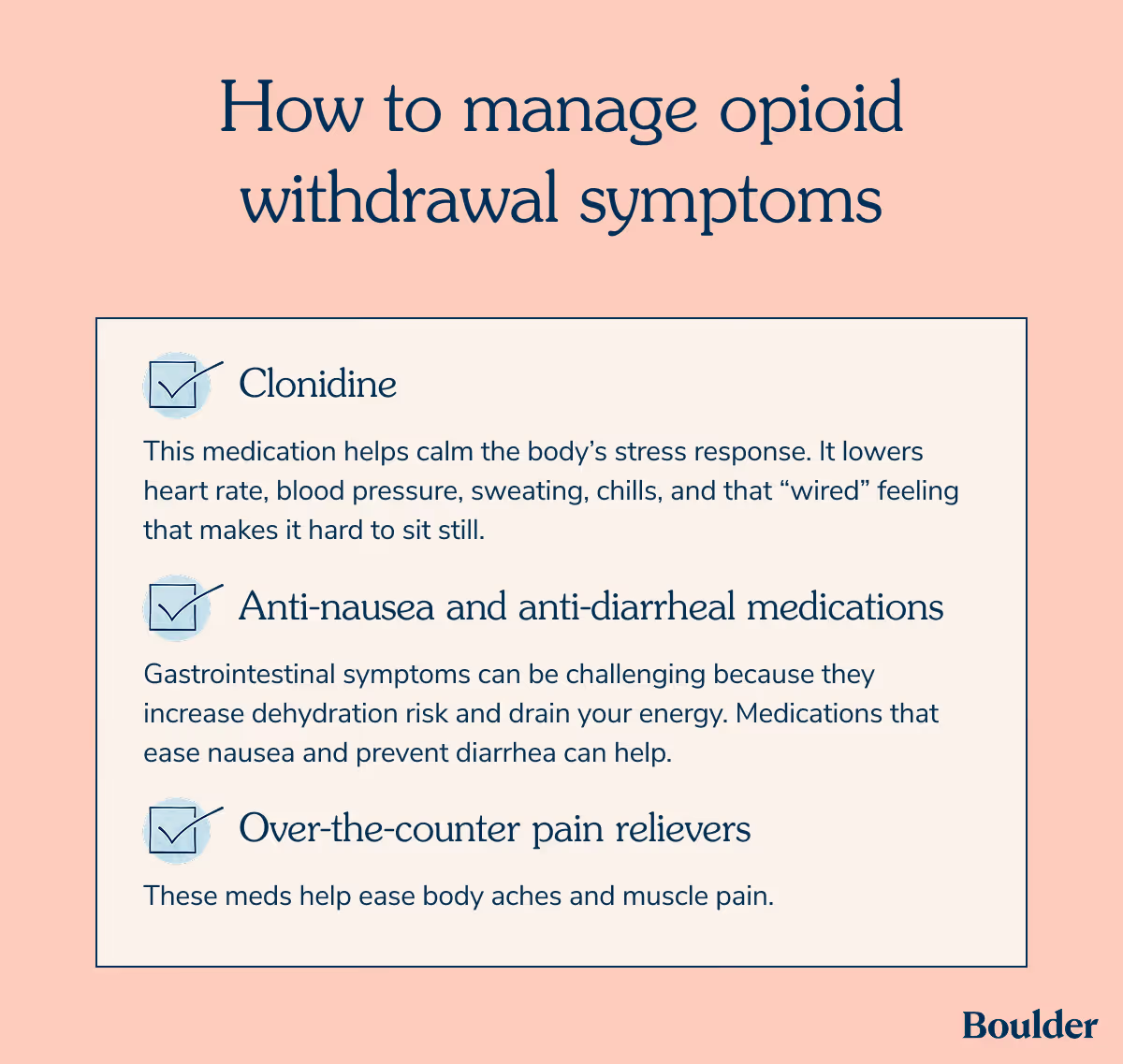
Additional medications may also be part of the plan to help ease symptoms. Dr. Pechter lists a few.
Medications aren’t the only tools for easing withdrawal. “Support from other people also makes a real difference,” Dr. Pechter says. Withdrawal is exhausting, so it's important to have someone in your corner. They might help you with medication timing, reminding you to drink water, or simply providing moral support while you're getting through it.
Opioid withdrawal symptoms are a major challenge for recovery. They are part of the body’s way of trying to reclaim a sense of balance. However, in the moment, withdrawal symptoms can feel like a bodily revolt.
Tools are available to ease symptoms. “Getting on Suboxone changed everything for me,” Campbell says. “ I’ve been able to live a healthy life ever since. There is a way through this, and there is a life on the other side.”
The timeline for opioid withdrawal depends on the opioid and whether it’s short-acting or long -acting. Short-acting opioids include fentanyl, heroin, morphine, oxycodone, and hydrocodone. Withdrawal from these opioids begins within hours and lasts for about 10 days. Long-acting opioids include buprenorphine and methadone. These are both used to treat opioid use disorder. Withdrawal for these can begin on the first day the opioid is no longer in one’s system and last for about a month.
The first signs of opioid withdrawal tend to be anxiety, cravings, dilated pupils, muscle aches, restlessness, runny nose, sleep difficulties, sweating, watery eyes, and yawning frequently.
The side effects of coming off an opioid painkiller are intense flu-like symptoms, including body aches, gastrointestinal symptoms such as vomiting and diarrhea, and chills or feeling hot and sweaty, to name a few. Other symptoms impact mood and mental health. These include anxiety, irritability, brain fog, and more.
At Boulder Care, we’re committed to providing clear, evidence-based information about opioid and alcohol use disorder recovery. Learn more about our editorial standards and medical review process.

Our mission is to improve the lives of people with substance use disorders. We provide medication, resources, and support to help our patients succeed on their own terms, wherever they are.
Now covered by Medicaid in Oregon and Washington – Schedule an online visit.