Published:
|
Last Updated:
June 26, 2026
You've got people now.


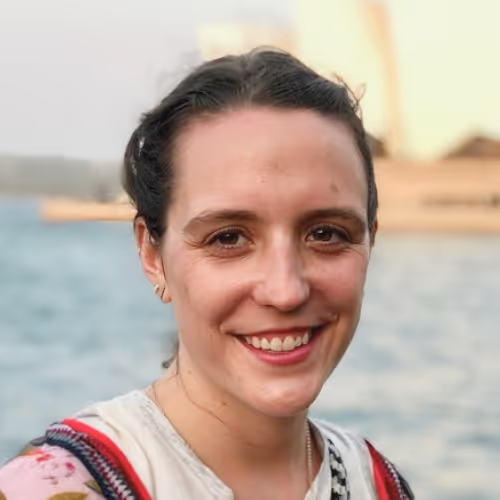
Nearly two decades ago, Crystal Campbell was in what she describes as a domestically violent relationship with her children’s father. “I was introduced to prescription pain pills,” she says. “For the first time, everything went quiet—the anxiety, the depression, the chaos. I could function, take care of my kids, and survive the abuse.” Eventually, she turned to heroin.
For more than a decade, she was in and out of jail and treatment. At one point, she nearly lost her life and was hospitalized for almost half a year. Upon discharge, she gained access to a clinic she could visit once a week to receive medication-assisted treatment (MAT) in the form of Suboxone. She credits the medication with saving her life.
“When people ask me why I use medication,” she says, “I tell them this: I could not wrap my brain around recovering the way other people did quickly enough to save my life. That doesn’t mean I never could have, but I know without a doubt that I would not be here today without the aid of medication.” Suboxone is just one form of MAT.
MAT uses Food and Drug Administration (FDA)-approved evidence-based medications to help treat addiction. These medications help reduce cravings and withdrawal symptoms in opioid or alcohol use disorders. They can be lifesaving medications while aiding recovery and boosting quality of life.
In this article, we explore medication-assisted treatment for opioid use disorder (OUD), medication-assisted treatment for alcohol use disorder (AUD), and more.
Medication-assisted treatment is exactly what it sounds like. It involves using medication for addiction treatment.
“The medications used in MAT are proven treatments that help address how substance use changes the brain over time,” says Shannon Boustead, MD, a family physician and MAT specialist at Boulder Care. “By reducing cravings, easing withdrawal, and lowering the risk of overdose and death,” he adds, “these medications help people feel more stable—often for the first time in a long while.”
Addiction is a complex chronic disease. Thinking of it as you would other chronic diseases, such as diabetes or asthma, can help. Just as treatment for these conditions requires medication, prescriptions may also be necessary to treat addiction.
“At its core,” Dr. Boustead says, “MAT reflects a simple idea: A substance use disorder is a medical condition, and effective treatment starts with care that helps people feel safe, stable, and supported.”
Decades of research show that treatment for substance use disorders requires a whole-person approach. This means that recovery looks a bit different for everyone and should be tailored to you, or your family member, or friend. When it is customized to you, it’s called patient-centered care, and medications play a valuable role.
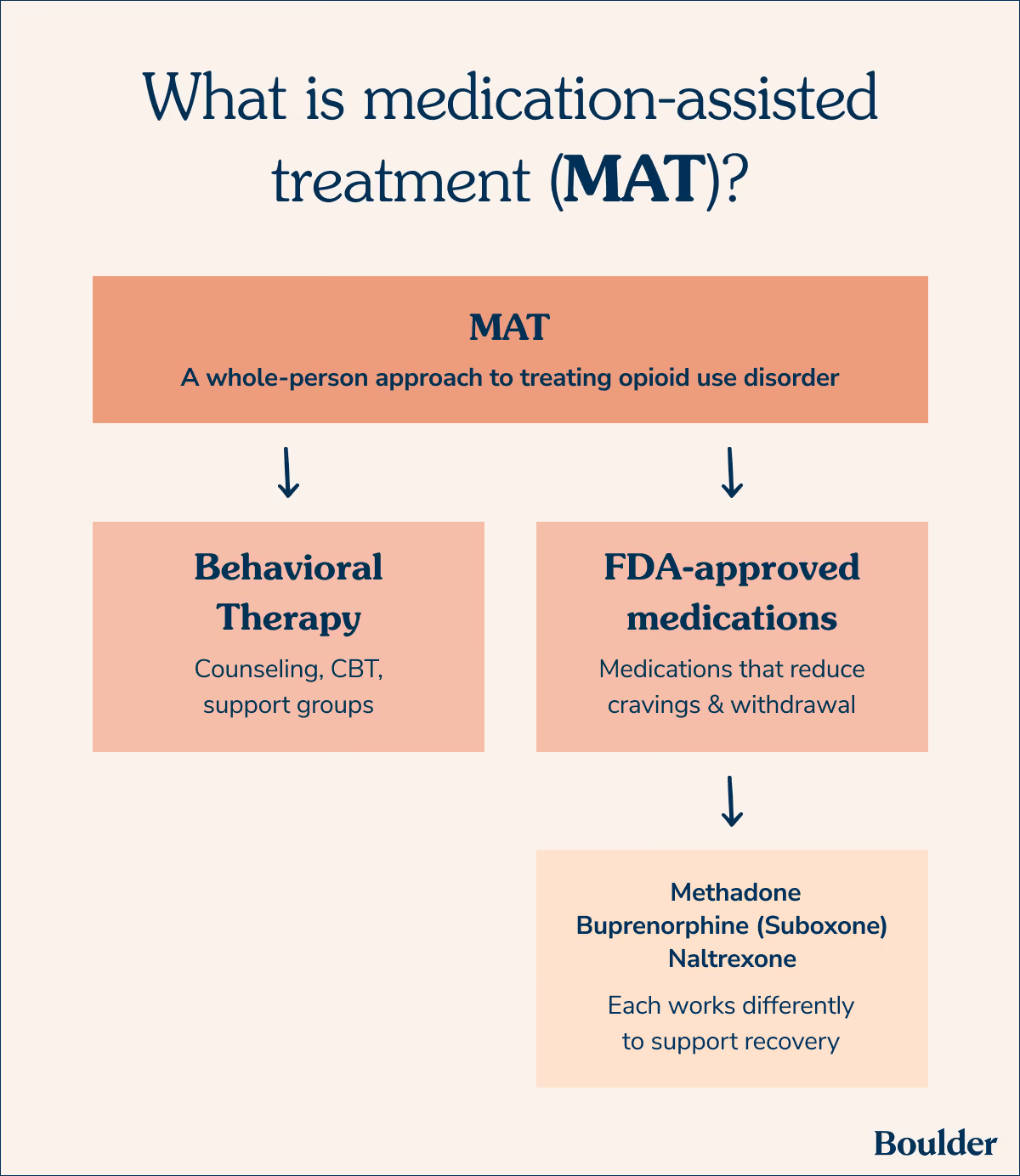
The term MAT can be a bit misleading, though it’s still sometimes used. And you may have searched for this term, so that’s why we’re using it in this article. However, Boulder Care clinicians prefer the terms “medications for opioid use disorder (MOUD)” or “medications for alcohol use disorder (MAUD).”
Dr. Boustead explains, “The reason is simple: for opioid use disorder, medications are not just ‘assisting’ treatment—they are the most effective part of it. These medications dramatically reduce overdose risk and save lives. Other supports like counseling and behavioral health care matter. But medication is often what makes engagement in care possible in the first place.”
Stephen A. Martin, EdM, FAAFP, FASAM, is an associate professor of family medicine and community health at the University of Massachusetts Medical School. He’s also the senior advisor for research and practice at Boulder Care. He says MAT “describes the treatment as medication-assisted, when medication is the treatment itself.”
MAT treats opioid addiction, with the following medications available.
Generic name: Buprenorphine*
Generic name: Buprenorphine/naloxone*
Generic name: Methadone
Generic name: Naltrexone
*Boulder Care offers multiple formulations (marked with an asterisk above), both brand name and generic depending on the patient’s insurance and preference.
MAT treats alcohol addiction, with the following medications available.
Generic name: Naltrexone*
Generic name: Acamprosate*
Generic name: Disulfiram*
*Boulder Care offers multiple formulations (marked with an asterisk above), both brand name and generic depending on the patient’s insurance and preference.
As with any treatment option, medication-assisted treatment has pros and cons. And Dr. Boustead says MAT is not right for everyone.
“Some people cannot take certain medications due to allergies or medical conditions,” he explains. “Others may choose non-medication approaches for personal or philosophical reasons. A small percentage of people are able to maintain long-term recovery without medication, though it’s difficult to predict who will do well without it.”
The important point here is that treatment and recovery in general is not one-size-fits-all.
MAT consists of taking a medication to treat OUD or AUD. Medications might be taken daily (or multiple times per day), weekly, or monthly. This depends on the specific formulation of the prescribed medications.
Medications might be taken as a tablet or a film. Sometimes these are designed to dissolve under the tongue or in your cheek. Other times, medications are taken via an injection, either weekly or monthly. In these cases, the treatment is extended release, meaning the active ingredient releases slowly over time rather than all at once.
“MAT is about more than medication alone,” Dr. Boustead says. “It typically includes ongoing medical care, behavioral health support, counseling when helpful, and attention to the real-life factors that affect health and recovery. These parts of care tend to work best because medication helps people get out of survival mode and into a place where healing and change are possible.”
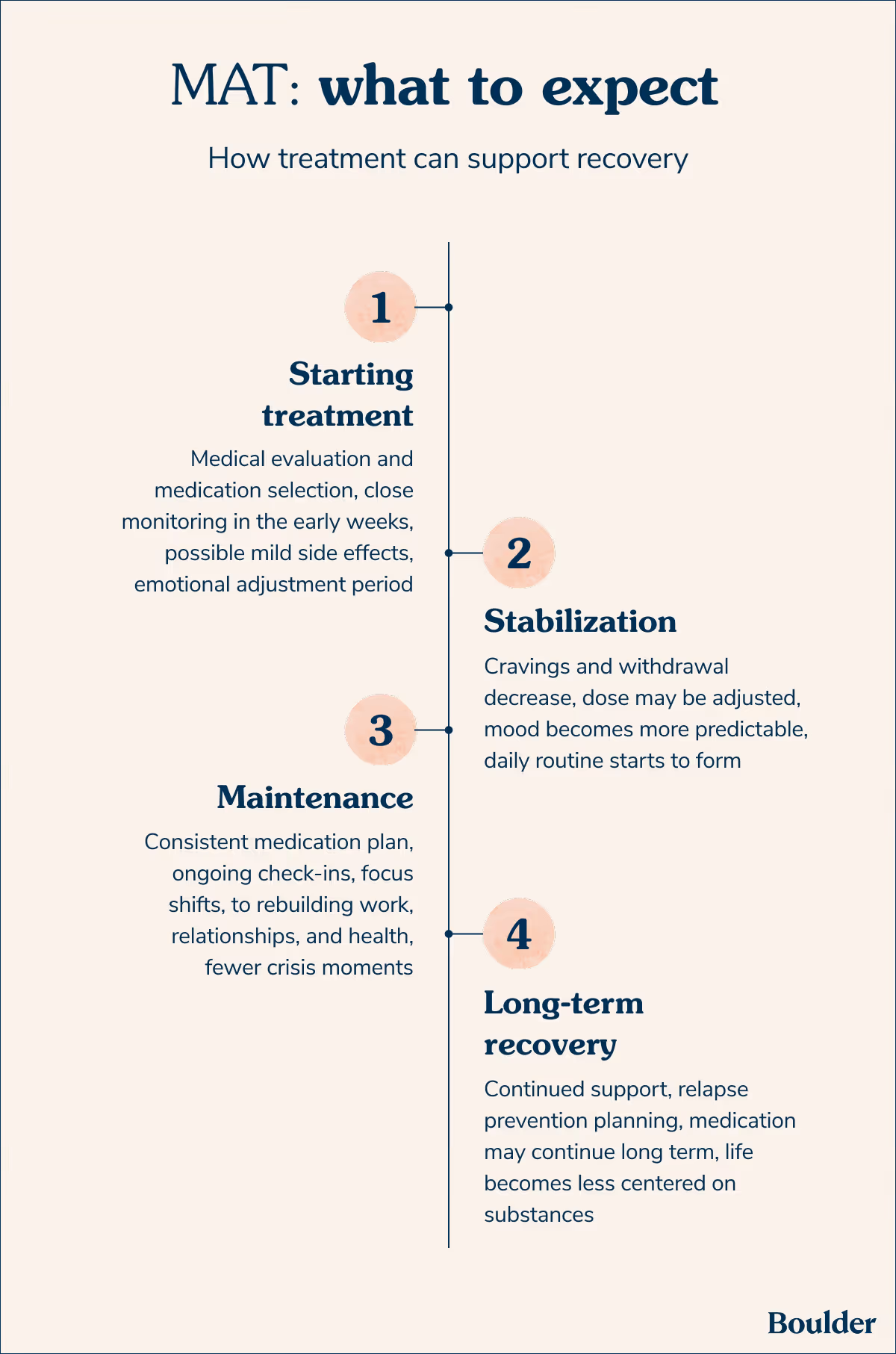
Campbell is now a Peer recovery specialist at Boulder Care. She shares more about how medication-assisted treatment for opioid addiction, specifically with Suboxone, helped her get out of survival mode and focus on recovery.
“Suboxone stabilized my anxiety, helped regulate my mood, and gave me the space to rebuild my life—getting a job, paying bills, getting my license back, buying a car, and creating stability,” she says.
“Early on,” she adds, “taking my medication each morning also gave structure to my day. Over the years, I’ve tapered to a much lower dose. And today it continues to support my mental health.”
You might be wondering, “Does medication-assisted treatment work? And how?” MAT works differently depending on the specific medication you or a loved one takes.
“For many people, MAT means fewer cravings, fewer medical emergencies, and a life that feels more stable and manageable,” Dr. Boustead says. “People on MAT are often working, parenting, rebuilding relationships, and staying alive. By any meaningful definition, that is recovery.”
One common misconception about MAT is that it means replacing one drug with another. Dr. Boustead explains why this is a myth. “MAT medications are prescribed at stable doses, taken in controlled ways, and used to treat a medical condition—not to create intoxication,” he says.
“The goal is stability and safety, not a substitute high,” he adds. “For many people, these medications allow life to become less centered on substances, not more.”
Dr. Martin agrees. “In the barest sense,” he says, “the opioids a person is addicted to are chemically similar to these treatment opioids. But in reality, buprenorphine and methadone offer a completely different way of living in the world, one where people can wake up and create a day and future of their own choosing and are freed from the dangers of the drug supply and the on-and-off experiences of withdrawal that make each day hard.”
Here are the key medication-assisted treatment benefits.
MAT is a powerful recovery tool that can disrupt the cycles of addiction in OUD and AUD. Disrupting these cycles provides stability. And stability offers you or a loved one a better foundation for recovery.
Boulder Care offers online MAT and other elements of a customized and comprehensive recovery plan. Elements include clinician support and peer support from providers who have lived experiences with OUD and AUD. To reduce barriers to care, Boulder operates virtually, via telehealth.
Campbell reflects on her recovery journey and expresses gratitude for low-barrier access to MAT.
“Today, my life looks completely different,” she says. “I own a home. I’m married. I have relationships with all of my children. I’m a grandmother, with another grandbaby on the way. I have pets, hobbies, and a career.”
If you're curious to learn more about your options for recovery, Boulder Care is here to help. Call 888-422-6530 to speak with a care team member and learn more about getting started.
Yes, the Affordable Care Act (ACA) requires most employer-sponsored plans and those bought on the marketplace to cover substance use treatment, including MAT. However, you should always check your plan’s specifics. Medicaid covers FDA-approved medications for OUD and AUD.
Plan details vary by state, so some restrictions may apply, such as using a generic rather than a brand-name medication, for example.
No, MAT is not just trading one drug for another. That’s a myth. Medications to treat OUD or AUD do not produce a high. Instead, they help stabilize you or a loved one by disrupting the cycles of addiction. This stability opens the door for improved treatment outcomes.
MAT is not the same as rehab in general. But it can be a part of rehab. “Rehab” is short for “Rehabilitation.” It can take many forms, from inpatient treatment to telehealth options. And it can include several different recovery tools, including therapy, peer support, and medications. MAT uses FDA-approved medications to treat OUD or AUD.
At Boulder Care, we’re committed to providing clear, evidence-based information about opioid and alcohol use disorder recovery. Learn more about our editorial standards and medical review process.

Our mission is to improve the lives of people with substance use disorders. We provide medication, resources, and support to help our patients succeed on their own terms, wherever they are.
Now covered by Medicaid in Oregon and Washington – Schedule an online visit.