If you're being treated with medication for opioid use disorder and learn you are expecting, one of your first thoughts might be: can you take Suboxone while pregnant? Is it safe for me and my baby?
Finding out that you’re pregnant while taking Suboxone or while using other opioids can cause concerns about how it might affect the pregnancy and your baby. Seeking information and answers is an important first step, and you deserve care and compassion without judgment or guilt.
“I have supported many patients throughout the years who have benefited from continuing their Suboxone while pregnant,” says Crystal Campbell, a Peer Recovery Supervisor at Boulder Care.
She emphasizes that this treatment helps both mothers and babies, pointing to her own family member’s experience being exposed to heroin before birth. Thanks to treatment, both mother and child are healthy and thriving, showing that early opioid exposure doesn’t determine a family’s future.
For someone with signs of opioid use disorder, staying on buprenorphine is recommended during pregnancy. It helps keep brain receptors stable, prevents withdrawal, reduces cravings, and lowers the risk of returning to opioid use.
You should not stop taking Suboxone or suddenly change your dose on your own. Instead, let your care team know that you are pregnant so they can help you decide whether you should keep taking Suboxone or switch to another medication.
In this article, we will look at what the evidence says about taking Suboxone during pregnancy, how it might affect the newborn, and questions you should discuss with your provider to help decide what’s right for your situation.
Resources are available to help, so you don’t have to figure this out alone. Call SAMHSA’s National Helpline at 1-800-662-HELP (4357) to find treatment, or call 988 for immediate crisis support. If you are in danger or experiencing an overdose, call 911 and administer naloxone (Narcan) if available.
Yes, you can take Suboxone while pregnant when it is prescribed and monitored by your care team. Staying on the medication is usually the safest option
“Medications for opioid use disorder are considered part of the standard of care for pregnant women with opioid use disorder, as medically observed withdrawal carries a high risk of return to use,” says Ilana Hull, MD, a collaborating physician with Boulder Care.
The Centers for Disease Control and Prevention (CDC), the American College of Obstetricians and Gynecologists (ACOG), and the American Society of Addiction Medicine (ASAM) all support taking buprenorphine for opioid use disorder during pregnancy.
While neonatal opioid withdrawal syndrome—something we will discuss later in this article—is a possibility, “there are no known risks of birth defects or long-term impacts of neonatal exposure to buprenorphine,” Dr. Hull says.
You should never stop taking Suboxone while pregnant or reduce your dose on your own without talking to your doctor first.
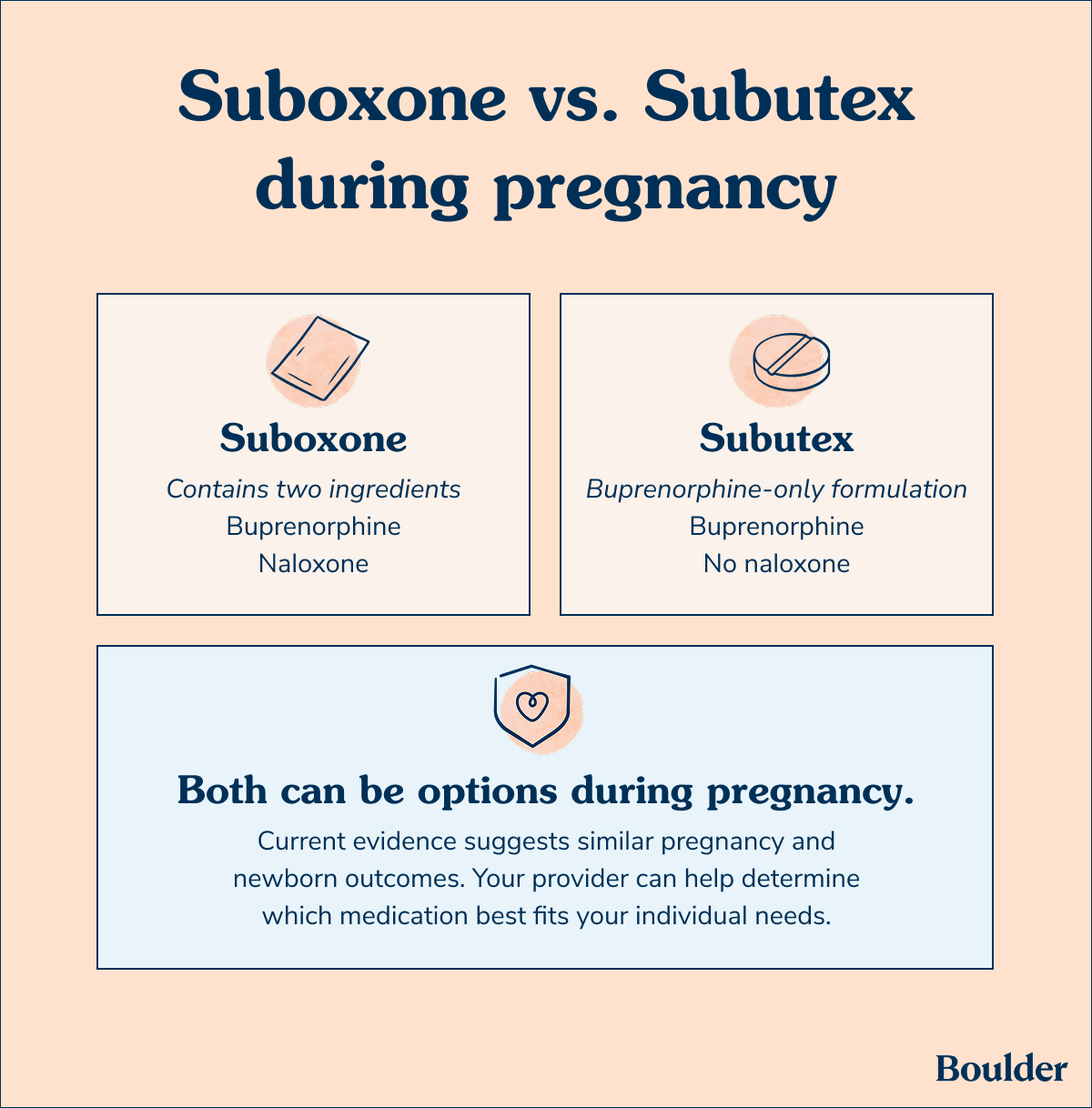
Subutex is a former brand name for a medication containing only buprenorphine, while Suboxone contains both buprenorphine and naloxone.
Some providers have historically preferred Subutex during pregnancy to avoid exposing the baby to naloxone. However, current evidence suggests that there are similar outcomes for pregnancies and newborns with both medications.
Both formulations are safe during pregnancy, so switching to Subutex is usually unnecessary. That said, providers may recommend one or the other based on your individual needs.
Your clinician can look at your treatment history and current situation to decide which option is the right fit for you.
You can learn more about the key differences between the two in our full comparison of Subutex vs. Suboxone for more details.

It’s understandable to feel like stopping Suboxone might be what’s best for the baby. But opioid use disorder is a medical condition, and research has consistently shown that continuing treatment during this time is the safest option.
When your cravings and withdrawal symptoms are gone, you can stay focused on your recovery and prenatal care throughout your pregnancy. Stabilized opioid receptors also lower the chance of returning to use, which in turn protects your baby.
“Although it is scary for a mother to know that her child may have some withdrawal potentially off of this medication, it’s also important to know that the chances of survival for her and her child greatly increase when they do continue on with this medication while pregnant,” Campbell says.
Stopping treatment increases the risk of experiencing uncomfortable Suboxone withdrawal, which makes returning to use more likely.
Additionally, your tolerance drops after a break from opioids, so returning to use increases the risk of experiencing a drug overdose, says The New England Journal of Medicine.
Even if you were already taking medication for opioid use disorder, that doesn’t necessarily mean that your treatment will stay exactly the same as before.
Pregnancy can affect how your body responds to medication, so you may find that you need to adjust your dose or how often you take your medication.
That said, any changes should be planned and supervised by your treatment provider, not attempted on your own.
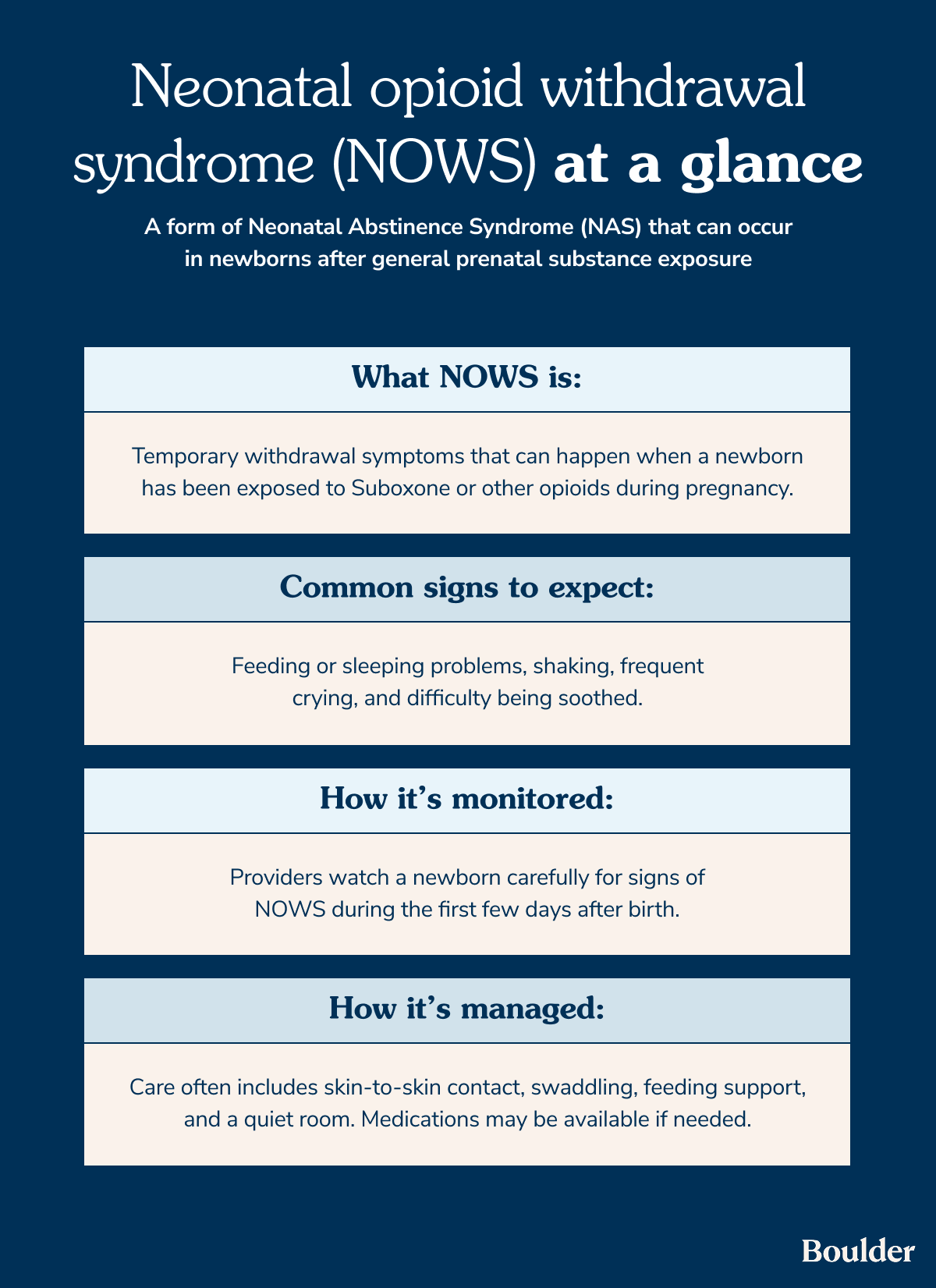
Neonatal opioid withdrawal syndrome (NOWS) is a condition that can develop in some newborns after regular exposure to opioids during pregnancy.
The CDC explains that NOWS is an opioid-specific subset of neonatal abstinence syndrome (NAS), a broader term for conditions that cause withdrawal in children exposed to substances before birth.
NOWS is a recognized possibility if a person takes Suboxone, methadone, or other opioids during pregnancy, but it can be managed effectively. Dr. Hull notes that any form of buprenorphine, including Suboxone, can potentially lead to dependence in a newborn exposed to medication in utero.
For that reason, she suggests that all newborns exposed to buprenorphine during pregnancy should be monitored for symptoms of withdrawal.
After birth, doctors will watch for symptoms like trouble feeding or sleeping, frequent crying, shaking, and difficulty being comforted.
Not every newborn exposed to opioids will develop NOWS, but when symptoms do occur, care often begins with simple steps like reducing stimulation, holding, swaddling, and providing frequent feedings.
Some babies may need medicine, such as morphine or clonidine, or a longer stay in the hospital until symptoms begin to improve, explains Pediatrics.
It’s normal and understandable to feel worried about your baby developing NOWS. There’s no “right” way to feel, but it’s important to remember that staying in treatment is the best way to protect both you and your pregnancy.

Suboxone is generally considered compatible with breastfeeding, so most people who are stable while taking Suboxone can breastfeed, says the Journal of Human Lactation.
Only a small amount of the buprenorphine in Suboxone passes into breast milk, and the naloxone in Suboxone isn’t expected to be a concern when medication is taken as prescribed.
In fact, breastfeeding and skin-to-skin contact can help comfort a baby with neonatal opioid withdrawal syndrome. Research in Breastfeeding Medicine suggests that breastfeeding can reduce the severity of NOWS, shorten a baby’s hospital stay, and reduce the need for medication.
But this is a personal decision that you should discuss with your care provider and pediatrician. They will consider your health, other substances and medications you might be taking, and your baby’s specific needs.
If you are pregnant and starting MOUD, you will meet with a clinician, make a medication plan, and check in regularly since your needs can change throughout your pregnancy.
SAMHSA’s clinical guidelines recommend buprenorphine- based medication or methadone along with evidence-based behavioral interventions.
If you already take Suboxone, be sure to tell your prescriber and clinical care team that you are pregnant so you can discuss any dose or dosing schedule changes that might be necessary.
Campbell notes that it can also be helpful to talk to a peer support provider about your options, which can include staying on Suboxone or getting inpatient treatment and continuing buprenorphine treatment once the baby is born.
If you’re just starting treatment, your provider will:
Accessible care built around your needs can help you feel more supported throughout your recovery and pregnancy. Telehealth is also a helpful option that can fit treatment into your schedule and life.
Medication and most insurance plans cover at least some portion of opioid use disorder treatment, but the exact costs, pharmacy rules, and insurance coverage can vary.
Boulder's pregnancy and opioid recovery care removes barriers to care by providing accessible, judgment-free treatment.
You don’t have to have already stopped using opioids to start treatment, and you won’t be turned away if you have a setback.
Boulder Care's goal is always to provide compassionate support that avoids stigma and fear and instead focuses on long-term health for mother and child.
There isn’t a single treatment option that’s best for everyone. Buprenorphine, the main ingredient in Suboxone, and methadone are both effective treatments for opioid use disorder during pregnancy. The Journal of the American Board of Family Medicine suggests that buprenorphine is associated with better newborn outcomes, including lower rates of NOWS, preterm birth, and low birth weight.
“I’ve seen plenty of healthy babies born on Suboxone,” Campbell says. Some may develop neonatal opioid withdrawal syndrome, but it’s not something that affects every baby, and it can be effectively monitored and treated. Dr. Hull notes that current research has found reassuring outcomes with both buprenorphine-only and buprenorphine-naloxone medications.
Yes, you can start taking Suboxone for the first time during pregnancy, and it is a recommended treatment for opioid use during pregnancy, SAMHSA says. The timing is key since starting too soon after taking opioids can lead to a sudden onset of withdrawal.
Contact a prenatal care provider or opioid treatment provider as soon as you can after learning that you are pregnant. Tell them about your recent opioid use, but do not suddenly stop opioids or go through withdrawal on your own. Instead, work with your provider to decide if Suboxone or methadone are good options for you. If you need help finding care, you can call SAMHSA’s National Helpline at 1-800-662-HELP (4357).
At Boulder Care, we’re committed to providing clear, evidence-based information about opioid and alcohol use disorder recovery. Learn more about our editorial standards and medical review process.
Now covered by Medicaid in Oregon and Washington – Schedule an online visit.