Published:
|
Last Updated:
June 24, 2026
You've got people now.


Danielle Bellosi was taking Suboxone for almost three years in the early 2000s. Back then, treatment looked different than it does today. Medications for opioid use disorder (MOUD) were more stigmatized. But now, MOUDs are recognized for how well they can aid with better recovery outcomes.
“Where I lived, being on Suboxone wasn’t really seen as ‘being in recovery,’” says Bellosi, CPRSS, CPRC, who is now a peer supervisor and certified recovery specialist at Boulder Care.
At the time, she was also facing legal troubles. And the legal system back then didn’t recognize Suboxone as a legitimate form of recovery. That added another layer of pressure. “I felt like I needed to be completely abstinent from everything,” she adds. So, Bellosi stopped taking Suboxone and experienced withdrawal.
“I came off using a standard detox protocol without a slow taper,” she says, “which made it much harder on my body. The withdrawal felt similar to other opioid withdrawal in some ways, but what stood out the most was the fatigue. I had almost no energy...it took a while for my body to start feeling normal again.”
Suboxone is now recognized as an invaluable, evidence-based OUD recovery medication that you can utilize long-term. It acts on your opioid receptors to stabilize you in recovery. But these receptors will become accustomed to the medication. So if you stop, your body has to recalibrate to a new state of balance. This recalibration can lead to Suboxone withdrawal symptoms that make you feel sick. A slow taper can help ease symptoms, however.
In this article, we explore Suboxone withdrawal symptoms, Suboxone withdrawal timeline, and more.
Suboxone contains two medications: Buprenorphine and naloxone. Buprenorphine is the medication that leads to withdrawal if you discontinue it. Why?
Buprenorphine is a long-acting opioid that aids recovery by satisfying the opioid receptors that have been desensitized by the overuse of opioids over time. These opioid receptors are concerned with motivation, reward, memory, and everyday functioning. So when your body no longer receives the opioid, it understandably panics.
A common misconception about starting buprenorphine is that you’re trading one addiction for another, but this is false. Buprenorphine is not creating a new addiction. It does not cause new changes to your opioid receptors. Instead, it works by satisfying opioid receptors that have been down-regulated from opioid addiction.
Stopping Suboxone means that your opioid receptors need to readjust because they will no longer be receiving that sense of balance.
Think of Suboxone detox or withdrawal symptoms as your body setting off alarm bells while it tries to reset without the opioid it’s been accustomed to receiving. Your body needs to reset your nervous system and rebalance its chemical messengers, called neurotransmitters.
Those alarm bells are expected. But they will be more muted with a careful medically supervised taper (weaning off), when compared with coming off Suboxone abruptly.
Before we dig into the withdrawal symptoms that might occur, we should note that you don’t have to stop this medication. Suboxone has been shown to improve recovery outcomes.
“People can certainly taper off Suboxone when they want to,” says Stephen Martin, MD, the medical director for research, education, and quality at Boulder Care. “But it’s important to know that being on it for at least two years helps people live longer and that tapering off for reasons that can be fixed could cause harm.”
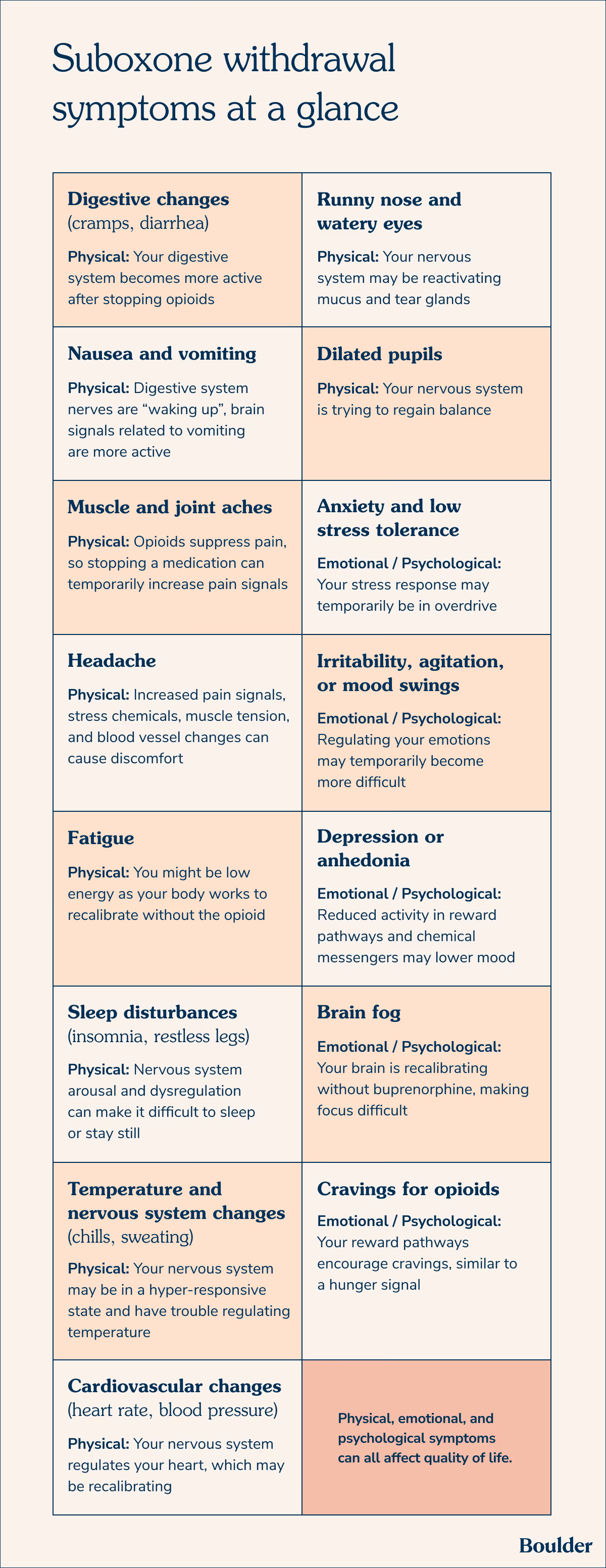
The temporary symptoms of Suboxone withdrawal result from your body trying to find a new sense of balance after you stop taking the medication. Here, we’ve categorized them into physical vs emotional or psychological symptoms. Both can affect quality of life.
Suboxone withdrawal length will vary based on the following:
“As to a taper versus an abrupt discontinuation,” Dr. Martin says, “the abrupt approach will be the full ‘cold turkey’ set of symptoms that are so awful.” However, a taper can lessen the severity of symptoms.
With a taper, the duration matters:
Buprenorphine is the medication that causes withdrawal symptoms when you stop taking Suboxone.
Buprenorphine is a long-acting partial opioid. This means it binds (partially) to your opioid receptors. And it binds for longer than other opioids, such as heroin, morphine, or oxycodone. These are examples of short-acting opioids.
Buprenorphine’s long action is one of the reasons withdrawal from buprenorphine is somewhat less severe than withdrawal from shorter-acting opioids, especially with a careful taper.
When you abruptly stop a short-acting opioid, such as heroin, the withdrawal is intense, with symptoms becoming their worst between eight hours and three days. But symptoms can linger for about 10 days.
When you taper off Suboxone, you withdraw a bit slower but for longer. Your symptoms may start once your dose is first lowered. But the experience varies from person to person. Your trusted clinical team can guide you through it.
If you’re planning to taper off Suboxone, doing so under the supervision of a recovery specialist is best. They can craft the right taper plan for you and adjust it if necessary as withdrawal symptoms arise. And they can prescribe medications for Suboxone withdrawal treatment.
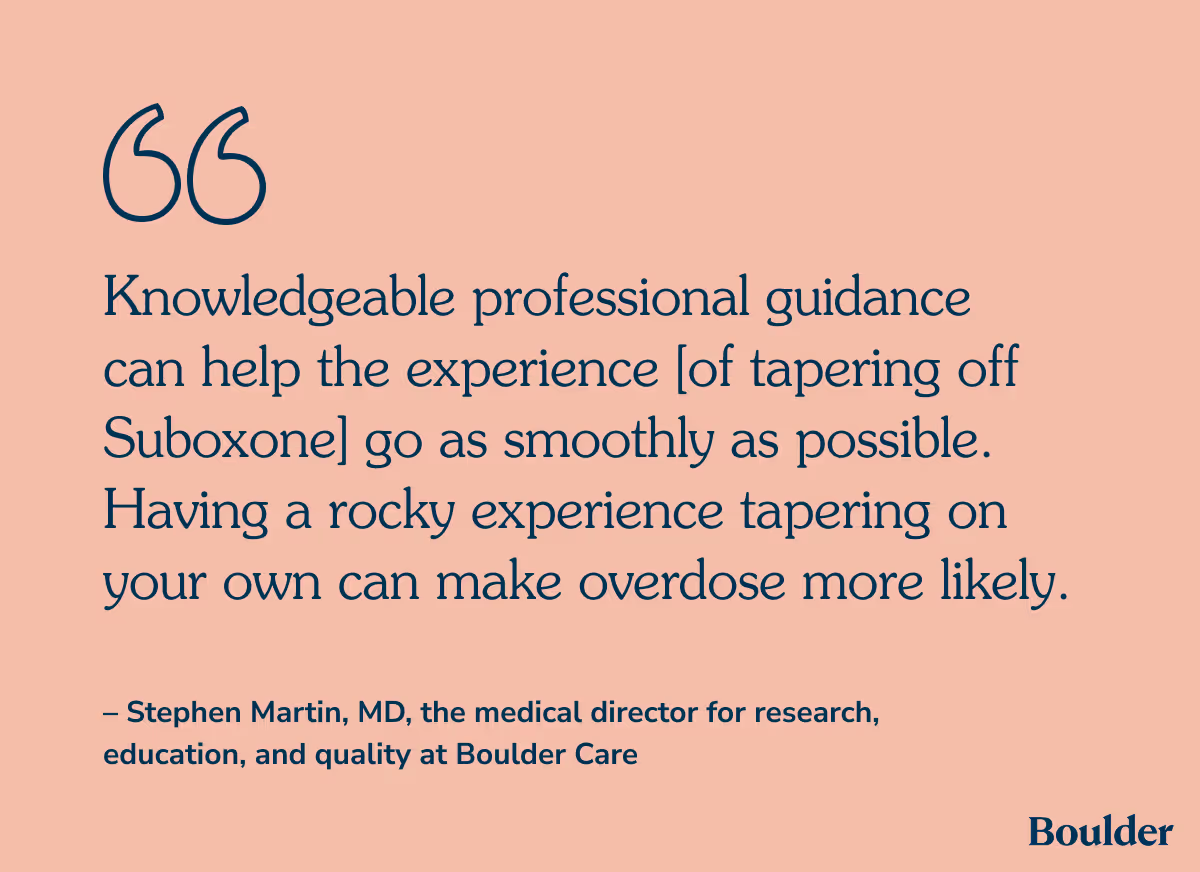
“Knowledgeable professional guidance can help the experience go as smoothly as possible,” Dr. Martin said. "Having a rocky experience tapering on your own can make overdose more likely.”
Bellosi agrees. “At the time,” she says, “there wasn’t as much knowledge about how to come off Suboxone in a way that supports your body. I wasn’t tapered. And I truly believe that made a big difference in how difficult it felt.”
As for deciding whether stopping Suboxone is right for you, Dr. Martin likes to explore with patients their reason for tapering or discontinuing use.
Common reasons to taper include:
“All understandable reasons,” Dr. Martin says. “But then we really need to have a respectful talk before they start a taper.” These are the “fixable” reasons he noted earlier in the article.
The truth is, stopping Suboxone can put people at higher risk of overdose and death.
So how long should you or a loved one take Suboxone? “The answer is as long as it is working and they want to,” he says. “But if it isn’t taken long enough, this risk of harm when stopping is real.”
A 2025 study found that Suboxone helped people live longer if they stayed on it for four years or more. They gained a lot of this benefit by staying on Suboxone for two years.
Think of taking Suboxone to treat your opioid use disorder the same way you'd take any other medication for a chronic illness. The choice is always yours, but you wouldn't expect a diabetes patient to stop taking life-saving insulin, so why should someone with a debilitating condition like OUD feel obligated to stop their medication?
“For most people,” Dr. Martin says, “the best situation for tapering off Suboxone is if you’ve been on it for at least two years and have a stable, secure recovery with trusted supports.”
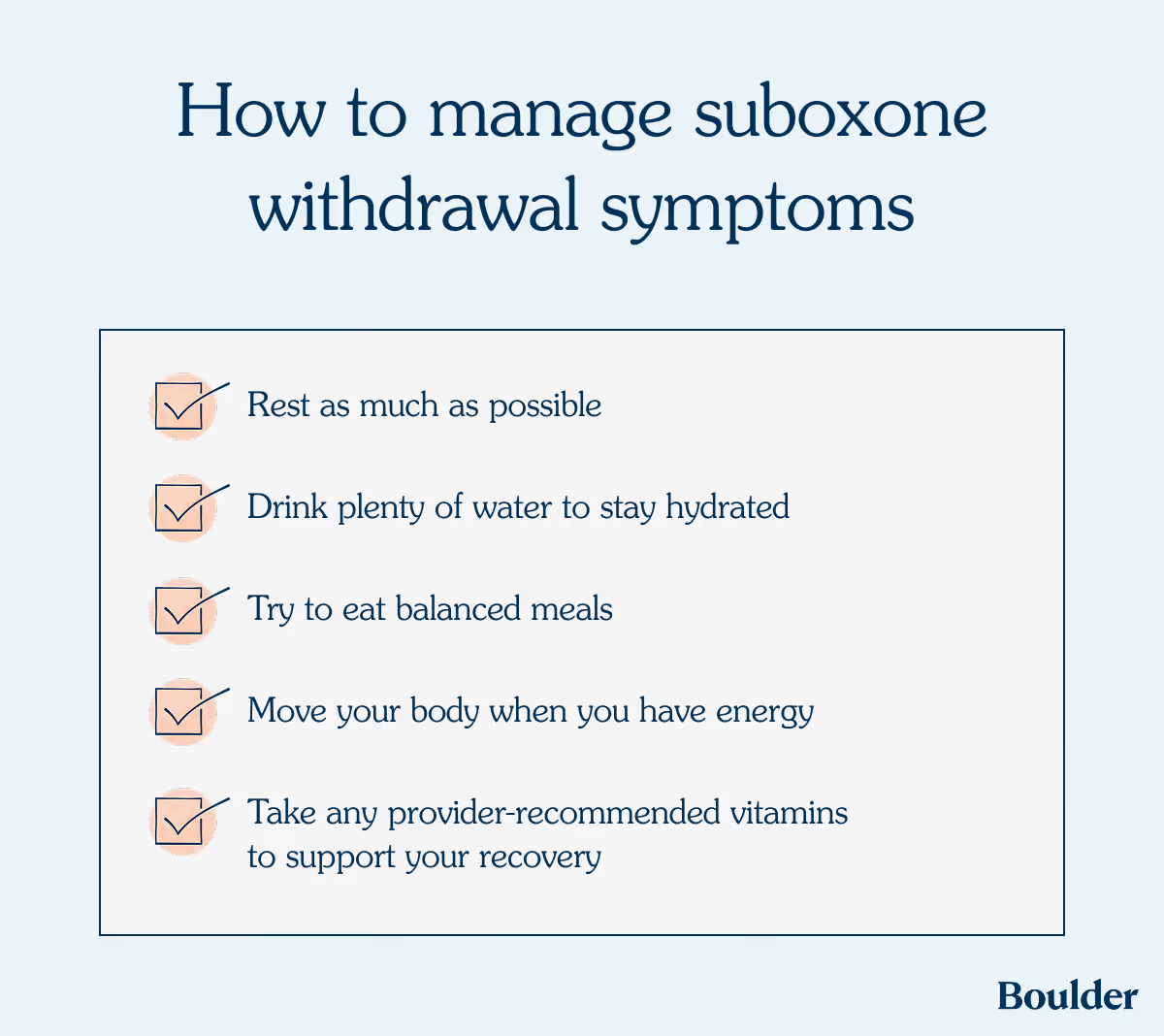
Your recovery team can help you manage withdrawal symptoms. But both Dr. Martin and Bellosi provide some tips.
“Please have Narcan around,” Dr. Martin says. “Things can go sideways, and staying safe is most important. All the supports and strategies that helped someone with their sustained recovery will also be helpful as they taper.”
From her experience, Bellosi recommends the following:
If you decide you no longer want to take Suboxone, you will experience some withdrawal symptoms as your body tries to recalibrate without the medication.
“If the time is right to discontinue Suboxone,” Dr. Martin says, “it can be done comfortably. We’re better at it now than in the past. Please work closely with your clinical team and stay safe.”
Bellosi adds, “You don’t have to rush. You deserve to do this in a way that feels safe and supported.” And Suboxone withdrawal help is available.
But most of all, after her experience, she wants you to know this: “Your recovery is your own. Being on medication doesn’t make you any less in recovery. And coming off of it should be your choice—not something you feel pressured into.”
If you just stop taking Suboxone, you will experience withdrawal symptoms. If you are interested in stopping, talk to your recovery specialist or prescribing physician. They can craft a tapering plan to wean you off the medication slowly. A slow and careful taper can help lessen withdrawal symptoms.
Suboxone can be hard to get off of because it contains the medication buprenorphine which is a partial opioid. Buprenorphine is a medication for opioid use disorder (MOUD). It is a helpful recovery tool. But it is an opioid.
After taking Suboxone, your body becomes accustomed to having it. When you stop Suboxone or taper off it slowly, your body has to recalibrate to not having it. This recalibration process can temporarily make you feel sick until your body readjusts.
Suboxone withdrawal can be uncomfortable, but it is not dangerous. By tapering slowly over several months or weeks, you can minimize withdrawal symptoms. A recovery specialist can help you remain as comfortable as possible as you withdraw from Suboxone.
Suboxone withdrawal is different from withdrawing from an opioid such as heroin. Suboxone contains buprenorphine, which is an opioid. However, buprenorphine is a longer-acting opioid than ones such as heroin or oxycodone.
Suboxone withdrawal may last longer and be less intense than withdrawal from heroin, oxycodone, or similar opioids. A careful taper plan can help ease your Suboxone withdrawal symptoms.
At Boulder Care, we’re committed to providing clear, evidence-based information about opioid and alcohol use disorder recovery. Learn more about our editorial standards and medical review process.

Our mission is to improve the lives of people with substance use disorders. We provide medication, resources, and support to help our patients succeed on their own terms, wherever they are.
Now covered by Medicaid in Oregon and Washington – Schedule an online visit.