Published:
September 24, 2026
|
Last Updated:
September 24, 2026
You've got people now.

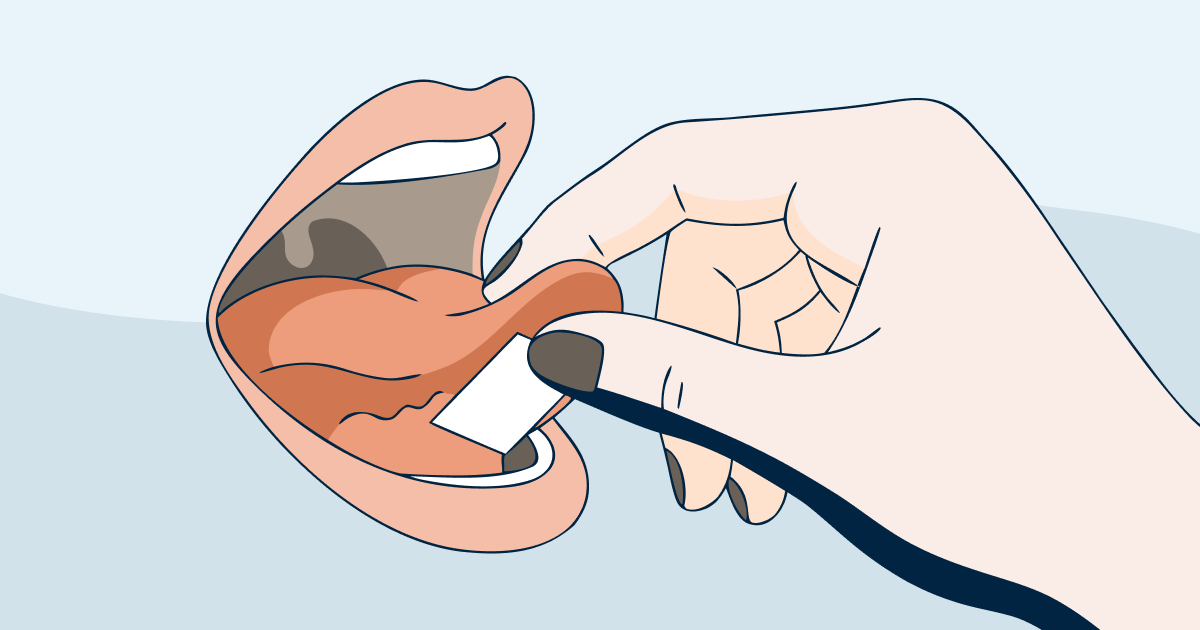
If you're starting Suboxone in film form, it's a good idea to double-check that you're taking the medication correctly. With Suboxone film, how you take it matters because the medication is designed to be absorbed through the tissues inside your mouth.
Several factors can affect how much medication your body absorbs, including where you place the film in your mouth and how long you allow it to dissolve.
In this article, we’ll go over how to take Suboxone film step by step, including Suboxone film placement, what to avoid while it dissolves, and what to do if you’re worried about whether you’re getting enough medication.
This information is for general informational purposes and not a substitute for medical advice. You should only take Suboxone film as directed by your healthcare provider. Contact them if you have questions about how or when to take your medication.
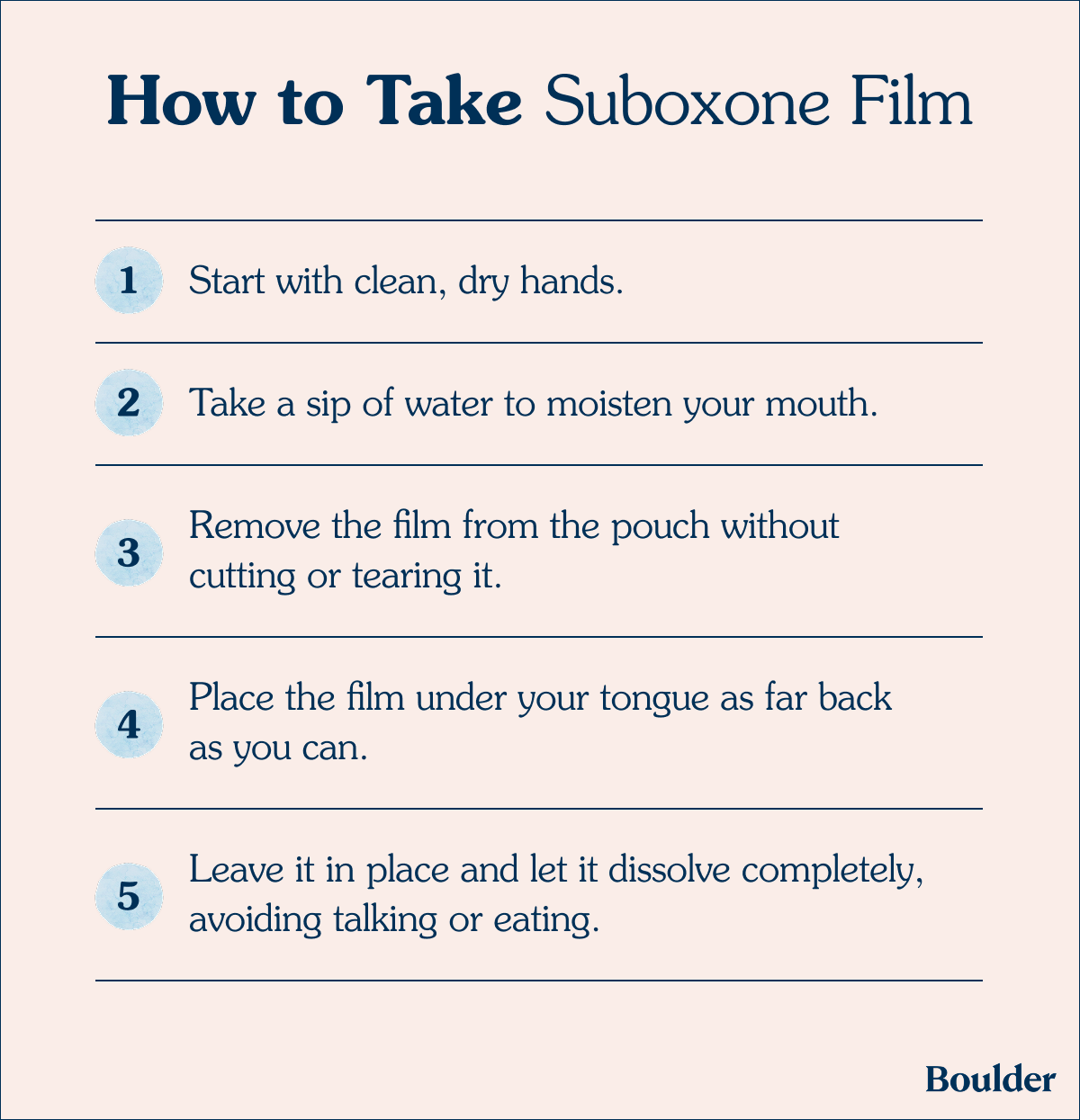
To take Suboxone film, place the entire film under your tongue and leave it in place until it completely dissolves.
Always follow the dosing and administration instructions given by your provider, especially if your prescribed dose involves taking more than one film.
The U.S. Food and Drug Administration recommends rinsing your mouth with water and swallowing after the film has completely dissolved, and waiting one hour after taking your medication before brushing your teeth to help reduce dental risks.
“The acid from the dissolving film temporarily softens your enamel, and brushing during that window can actually wear it away rather than clean it,” Dr. Boustead explains.
Swallowing Suboxone film can reduce the amount of medication that your body absorbs. The prescribing instructions say that the film is designed to dissolve under the tongue, allowing buprenorphine to pass through the tissues of your mouth and into your bloodstream.
“Swallow it too soon, and you lose part of that dose to your gut, where your liver breaks most of it down before it ever reaches your bloodstream in a meaningful way,” Dr. Boustead explains.
This is known as first-pass metabolism, which reduces the amount of buprenorphine that reaches your bloodstream when swallowed, says Health Psychology Research.
However, swallowing the film before it dissolves isn’t the same as swallowing the saliva that remains in your mouth after it has dissolved, which we’ll discuss next.
The Suboxone spit trick means waiting until the Suboxone film has fully dissolved, then spitting out the remaining saliva in your mouth instead of swallowing it. Some find Suboxone’s aftertaste unpleasant, so spitting out the remaining saliva can help reduce the bitter taste and lessen nausea, according to Johns Hopkins University.
Dr. Boustead says that while he often recommends it to his patients, the spit trick is not part of the official Subxone instructions. “In my clinical experience, patients who feel nauseated when they swallow that leftover saliva, the nausea goes away once they switch to spitting,” he says.
Bellosi also recommends avoiding swallowing saliva while the film is dissolving. “I personally found that swallowing the saliva sometimes made me feel nauseous,” she says.
While there’s not yet any research on this practice, Dr. Boustead notes that the medication’s pharmacology backs up the technique. “By the time the film is fully dissolved, most of what's going to absorb through the tissue under your tongue already has, so spitting means you're not throwing away much,” he says. “My view is that getting most of a dose reliably, without nausea, beats a 'perfect' technique that makes someone want to quit their medication.”
If nausea or other Suboxone side effects bother you, ask your provider if spitting out the remaining saliva is an appropriate option for you. Just don’t spit while the film is still dissolving, since you could lose part of your dose.
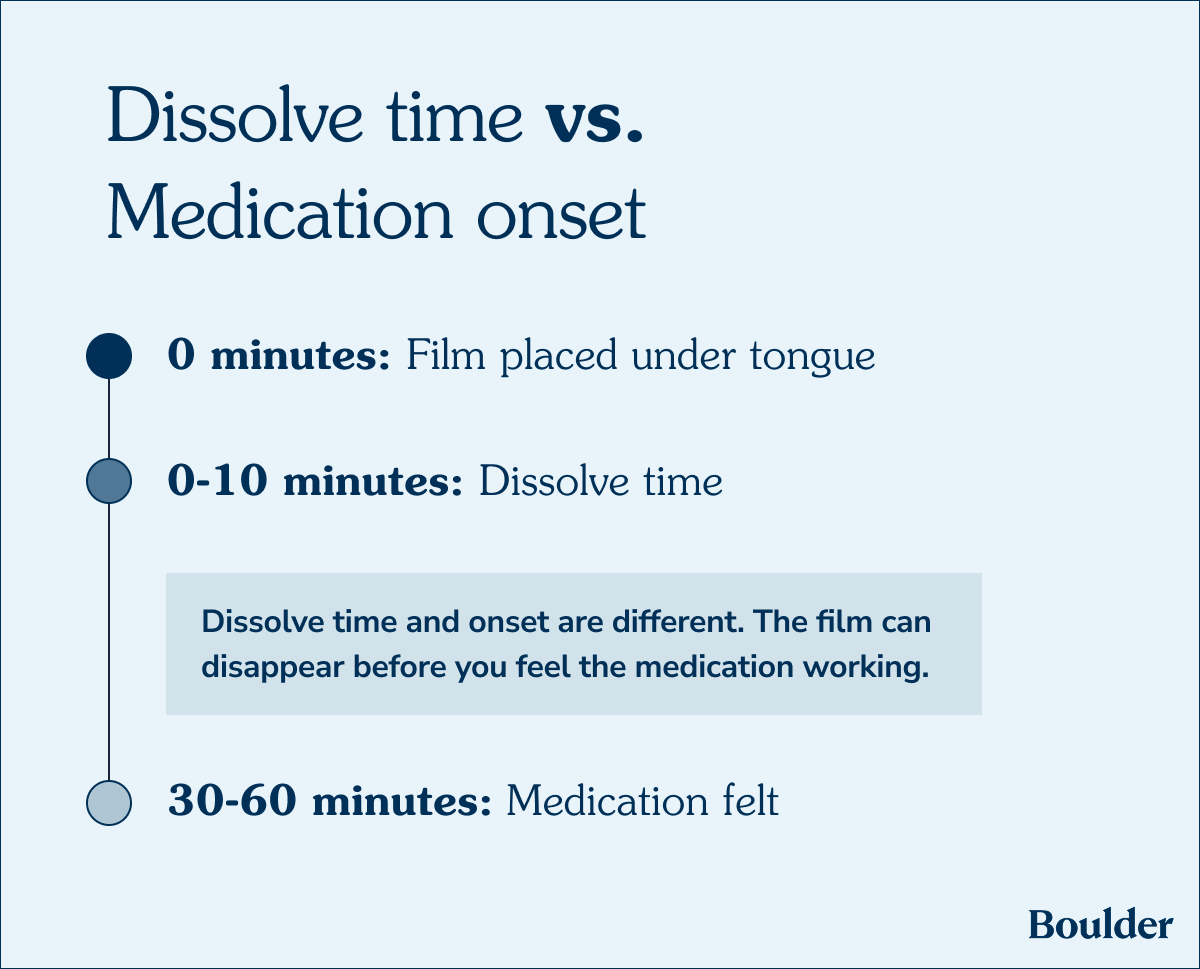
Suboxone film dissolve time can vary, but it usually happens within 10 minutes, according to the Journal of Addiction Medicine, and the effects of buprenorphine become noticeable within 30 to 60 minutes.
“It usually takes several minutes to fully dissolve, sometimes closer to ten,” Dr. Boustead says. “I tell my patients to let that saliva sit for about twenty minutes total. That's more time than the medication technically needs, but it's a comfortable margin.”
Suboxone film works similarly to buprenorphine/naloxone tablets, but tends to dissolve faster. Dissolve time and onset are two different things. The film can disappear before you begin to feel like the medication is working. Dissolve time can vary, so keep it under your tongue until it has completely dissolved, even if it takes a little longer than you expected.
While you wait for the film to dissolve, the official prescribing instructions say you should avoid eating or drinking. Bellosi also recommends taking films during times of the day when you know you won’t need to talk much. “This gave the film time to fully dissolve and absorb without interruption,” she says.
If Suboxone doesn’t feel like it’s working as well as you expected, it might be due to how you’re taking it or whether your current dose is meeting your needs. Don’t just take extra medication on your own.
Start by checking how you’re taking the medication. “That's one of the more common reasons someone feels like their dose 'isn't holding' — it's not the medication, it's the technique,” says Dr. Boustead.
The next thing to do is to consider how much time has passed. You won’t get immediate results right after the film dissolves. The medication’s effects take some time to kick in, so if you’ve just taken your dose, it’s too soon to tell how well it’s working.
You may also need to have your dose adjusted. According to the Substance Abuse and Mental Health Services Administration (SAMHSA), finding the right buprenorphine dose involves adjusting it based on whether you still have withdrawal symptoms and cravings.
A dose that’s too low might not give you enough relief from withdrawal symptoms and cravings, so it’s important to be aware of the signs that your Suboxone dose is too low.
If you’re not sure if Suboxone is working as well as it should, reach out to the treatment team at Boulder Care for personalized help with medication-assisted therapy (MAT).
Questions about how to take the medication and the dose you need are expected when starting treatment, and your provider can help you determine whether anything needs to change.
.png)
Taking Suboxone film correctly can maximize Suboxone absorption, which is why it is so important to always follow your prescriber's instructions. The most important things to remember are to place the film under your tongue and to give it time to dissolve all the way.
If the film is difficult to take or you’re still having withdrawal symptoms and cravings, talk to your care team. Getting used to taking your medication and finding the right dose is part of the process and may take some adjustment. Your provider can work with you to make sure your medication is working well for you.
The Suboxone spit trick may help with the bitter aftertaste and nausea that some people experience, but it isn’t part of the medication’s official prescribing instructions. The instructions say to swish with water and swallow once the film has fully dissolved. If you want to try the spit trick, talk to your provider about whether it’s safe for you and how it might affect your treatment.
Dr. Boustead recommends picking one method and sticking with it. “How you take it affects how much you absorb, so consistency matters more than which method you pick,” he says.
There isn’t an official “15-minute rule” for taking Suboxone film. You might see recommendations online to leave it under your tongue for a set amount of time, but the official instructions say to leave the film in place until it is completely dissolved. How long this takes can vary from person to person, so focus on keeping it under your tongue until you can tell it has completely dissolved, rather than watching the clock.
Suboxone is available as a tablet or a sublingual film that dissolves under the tongue. Suboxone film isn’t necessarily stronger than buprenorphine/naloxone tablets, but the two formulations are absorbed differently. One report by the Canadian Agency for Drugs and Technologies in Health found that the films dissolve faster and may offer additional benefits compared to the sublingual tablets. However, one should not automatically be considered better than the other, and the one that is right for you may vary depending on your needs.
At Boulder Care, we’re committed to providing clear, evidence-based information about opioid and alcohol use disorder recovery. Learn more about our editorial standards and medical review process.

Our mission is to improve the lives of people with substance use disorders. We provide medication, resources, and support to help our patients succeed on their own terms, wherever they are.
Now covered by Medicaid in Oregon and Washington – Schedule an online visit.