Tianeptine isn’t chemically an opioid, but it activates opioid receptors and can cause opioid-like dependence and withdrawal.
Withdrawal can cause anxiety, nausea, agitation, insomnia, body aches, and strong cravings. Tianeptine use also carries the risk of overdose.
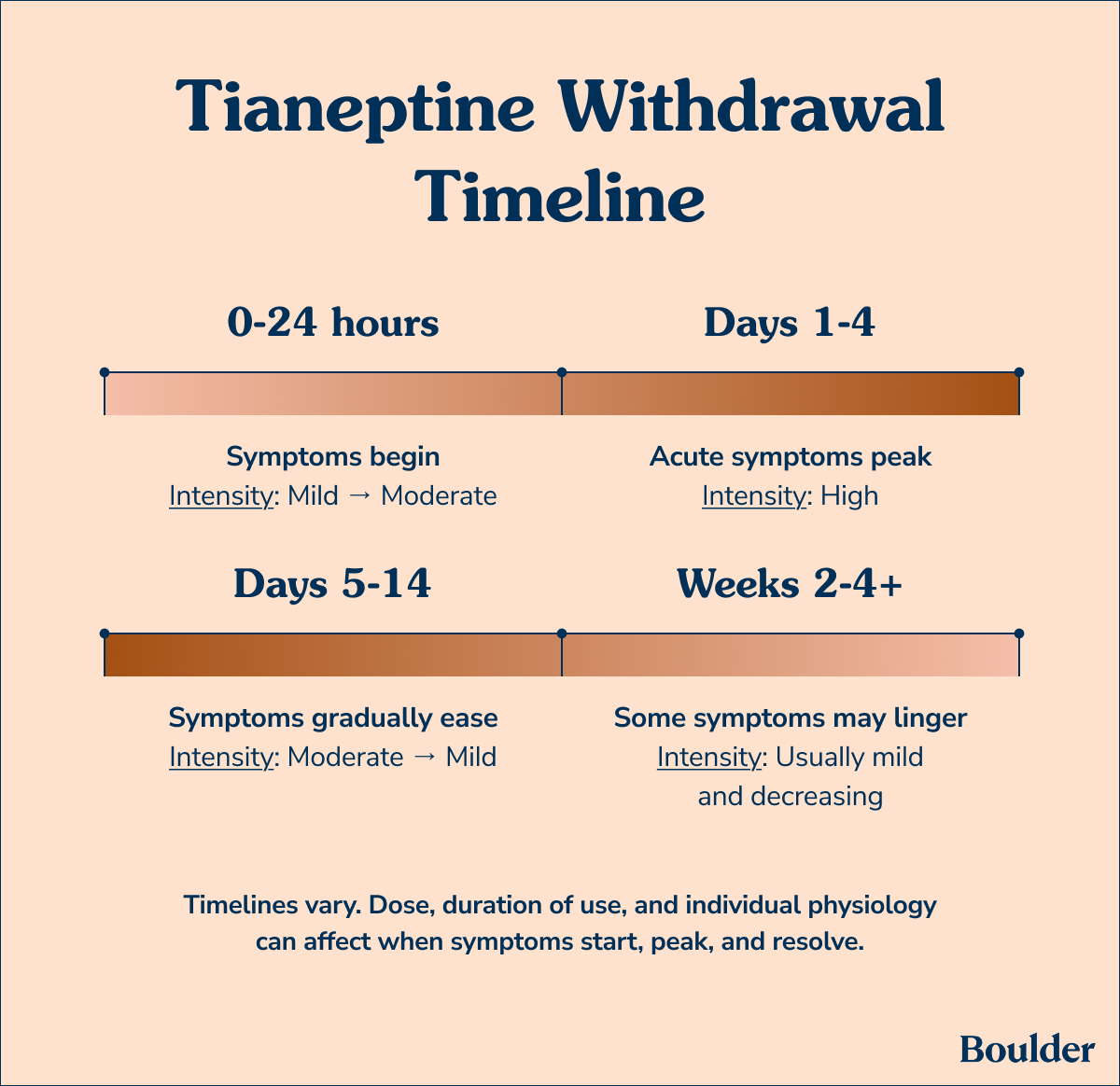
Withdrawal symptoms may begin within hours of the last dose and are most intense during the first few days, but then gradually ease over a week or two.
Treatment can make withdrawal safer and more manageable, with options that may include buprenorphine, medications for specific symptoms, counseling, and peer support.
Tianeptine withdrawal can lead to many uncomfortable symptoms that make it hard to focus on anything else. If you are planning to stop taking tianeptine, it's normal to feel concerned about what comes next.
"Tianeptine is a medication used in some countries to treat depression, but it is not approved by the FDA for any medical condition in the United States," explains Mike Winer, MD, the associate director of addiction medicine and NYC Health + Hospitals.
Many people who become dependent on tianeptine never intended to misuse it. "In the US, it is unregulated and commonly marketed as a 'dietary supplement' or 'brain booster'. Products containing tianeptine are easily purchased online, at smoke shops, or in convenience stores," Dr. Winer says. It's been dubbed "gas station heroin" as a result, often sold under brand names like Zaza and Tianna Red.
Because of how it acts on the brain's opioid receptors, tolerance and dependence can develop gradually before a person realizes it's happening. It's a result of how the drug affects the brain, not a sign of personal weakness or a lack of willpower.
This guide explains the symptoms of tianeptine withdrawal, how long they last, what treatments can help, and why it's safest to seek medical care.
Our program is based on your goals, not our rules.
Whether you want to reduce use or stop altogether, your care team has your back.
Tianeptine withdrawal refers to the symptoms that can happen when someone who has become physically dependent on tianeptine stops taking it or cuts back.
According to a 2026 systematic review in Drug and Alcohol Dependence, because tianeptine activates the same mu-opioid receptors as drugs like heroin, oxycodone, and morphine, its withdrawal often looks a lot like opioid withdrawal.
People may experience symptoms like:
Anxiety
Sweating
Nausea
Muscle aches
Diarrhea
Insomnia
Strong cravings
Tianeptine is not an opioid, but it acts like one
While tianeptine has opioid-like effects, it's important to recognize that it's not actually an opioid chemically. Instead, it belongs to a different class of drugs. The similarity comes from how it affects the brain, not its chemical structure. Over time, the brain adapts to those effects, which is why stopping tianeptine can lead to withdrawal.
Dr. Winer notes that because these products are unregulated, it's hard for people to know the dose and concentration of tianeptine they are taking. "At doses above therapeutic levels, tianeptine strongly activates the body's opioid receptors. This continued activation can lead to the development of rapid tolerance and physical dependence," he says.
The Journal of Opioid Management describes tianeptine as a full mu-opioid receptor agonist, which explains why dependence and withdrawal are so similar to what happens with opioids.
Despite these effects, it’s often marketed with claims related to boosting mood, focus, or cognitive performance, making it seem less risky than it actually is.
According to the U.S. Food and Drug Administration (FDA), tianeptine is not approved for any medical use. However, supplement suppliers have found a loophole in the 1994 Dietary Supplement Health and Education Act (DSHEA), which doesn't require the same safety testing.
What does tianeptine withdrawal feel like?
Tianeptine withdrawal can feel very similar to opioid withdrawal, causing physical symptoms, emotional distress, and strong cravings that vary from uncomfortable to more severe. Case Reports in Psychiatry says that some of the most common symptoms include anxiety, agitation, and gastrointestinal distress.
Physical symptoms
During the first few days, many people experience symptoms like:
Factors like the dose you were previously taking, how long you've been taking tianeptine, and whether you're also taking other substances or medications can affect what withdrawal feels like.
Psychological symptoms
The emotional side of tianeptine withdrawal can be just as challenging as the physical symptoms. Common psychological symptoms of tianeptine withdrawal include:
Severe anxiety or panic
Depressed mood
Irritability or agitation
Difficulty concentrating
Strong drug cravings
Feeling emotionally "flat" or unable to enjoy things
While the physical symptoms of withdrawal often start to improve after the first week, psychological symptoms like anxiety, depression, sleep problems, and cravings can last much longer. Lingering symptoms can increase the risk of returning to use without ongoing support and treatment.
When to get immediate help: If withdrawal is causing thoughts of self-harm or suicide, call or text 988 to reach the Suicide & Crisis Lifeline or go to the nearest emergency department. Help is available, and these symptoms can be treated.
Get the medication you need, and the support you deserve.
We provide FDA-approved medications for alcohol and opioid addiction — and support services to help you stay on track and reach your recovery goals.
Tianeptine withdrawal timeline: what to expect, hour by hour and day by day
Symptoms of tianeptine withdrawal tend to be most intense in the first few days, while problems with mood, sleep, and cravings can linger for weeks or longer.
The exact timeline varies depending on how much was used, how often it was taken, the type of product, and whether other substances were also taken.
It's important to note that research on the tianeptine withdrawal timeline is limited. Most evidence comes from case reports and poison control records instead of large studies, so these time frames should be viewed as general estimates.
Hours 0-24: onset
Tianeptine has a short half-life of around 2.5 hours, according to ACS Chemical Neuroscience, meaning that blood levels fall quickly after a dose. That explains why withdrawal can begin in just a few hours, particularly for people who have been taking large or frequent doses.
A study in Cureus reported that a person sought treatment for withdrawal symptoms approximately 12 hours after stopping tianeptine.
Early symptoms may include:
Runny nose
Stomach discomfort and nausea
Growing anxiety or uneasiness
Restlessness
Sweating or chills
Cravings to take more tianeptine
Days 1-4: acute peak
The first few days are usually the most intense part of withdrawal. Unpleasant physical symptoms can build quickly, and poison-control data reported by the CDC suggest that common acute tianeptine withdrawal symptoms include nausea, agitation, vomiting, diarrhea, heavy sweating, and rapid heart rate.
“Symptoms progressively worsen, peaking around 24 to 48 hours,” Dr. Winer says. This phase of withdrawal can feel overwhelming, but the most severe physical symptoms usually begin to improve within a few days.
Your doctor can offer medications to control symptoms and prevent dehydration. Managing these symptoms can reduce the risk of returning to tianeptine just to make the withdrawal symptoms stop.
Days 5-14: early stabilization
Symptoms such as sweating, chills, body aches, and diarrhea begin to ease up during the second week. People may feel their energy and appetite returning, although they may still feel fatigued during the day and have trouble sleeping at night.
“Physical symptoms gradually diminish, but for individuals with heavy, long-term use, acute symptoms can persist for up to two weeks,” Dr. Winer says.
While physical symptoms improve, psychological symptoms such as anxiety, depression, and insomnia typically remain strong even as the body starts to recover. While the exact timeline varies, research in Case Reports in Psychiatry suggests that tianeptine withdrawal typically lasts 1 to 2 weeks, although current evidence is still limited and individual experiences may differ.
Weeks 2-4 and beyond: protracted withdrawal
Even though many symptoms usually resolve within the first week or two, Therapeutic Advances in Psychopharmacology says that some people may continue to experience symptoms beyond this period. This is known as protracted withdrawal or post-acute withdrawal.
Research on prolonged withdrawal from tianeptine is still limited, but given how the drug acts on opioid receptors, it is likely that some people will experience lingering symptoms related to mood, sleep, and cravings.
What makes withdrawal worse for some people?
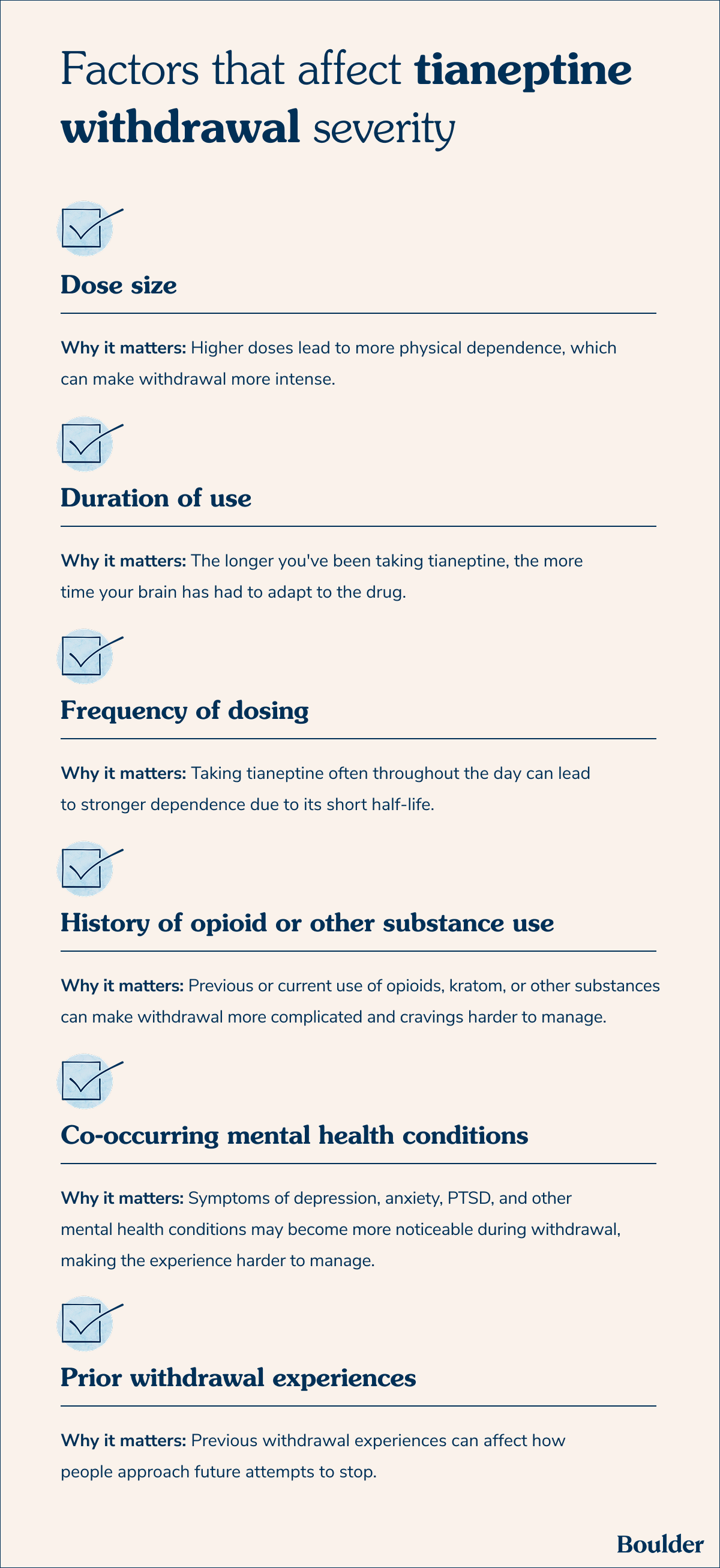
Withdrawal symptoms may be more severe when people have been taking tianeptine at higher doses or for longer periods, or when they have other individual factors that tend to make recovery more challenging.
These are some of the common factors that can affect withdrawal, but they aren't the only ones. Overall health, age, other medications, and the specific type of tianeptine product a person was taking can also impact the withdrawal experience.
Talking to a healthcare provider is the best way to assess your individual risk factors and determine the safest way to approach withdrawal.
Why you shouldn't try to stop tianeptine on your own
People sometimes try to get off tianeptine on their own, but quitting without medical support can be difficult and dangerous in some cases. Withdrawal can be severe, and returning to use after your tolerance has dropped increases your risk of overdose.
“Individuals who are using high doses of tianeptine and attempt to stop without medication assistance are at higher risk of significant withdrawal and greater rates of return to use,” Dr. Winer says.
It can be really hard to get through the first few days without support, but medical guidance can provide relief during the most challenging part of recovery.
The overdose risk of stopping and starting again
One of the biggest dangers during withdrawal isn't the withdrawal itself. It's what can happen if a person starts taking tianeptine again after they stopped for a while.
After even a short period of abstinence, the body's tolerance to tianeptine begins to decrease. That means if someone experiences several days of withdrawal and then returns to the same dose they were using before, their body might be unable to handle it. This can increase the risk of a life-threatening overdose.
Overdose signs and naloxone
Call 911 immediately if someone is experiencing signs of an opioid overdose or tianeptine overdose, which may include:
Shallow or stopped breathing
Blue or gray lips or fingernails
Limpness or unresponsiveness
Pinpoint pupils
Choking, gurgling, or snoring sounds
Because tianeptine activates the same mu-receptors as other opioids, naloxone (Narcan) can reverse a tianeptine overdose. It works by displacing the drug from the receptors to restore breathing. That said, effectiveness can vary depending on many factors. Even if naloxone appears to work, always call 911 and wait for emergency responders, because that person may require additional doses and further medical care.
How tianeptine withdrawal is treated
Treatment for tianeptine withdrawal usually focuses on managing withdrawal symptoms and reducing craving to help people feel more stable as they recover.
Medical detox and stabilization
The first goal of treatment is to get people through the acute withdrawal period as safely and comfortably as possible. Depending on the severity of a person's symptoms, detoxing from tianeptine might happen in an outpatient setting, through a telehealth provider, or in a hospital or inpatient detox program.
During this stage, your provider will help you manage withdrawal symptoms with medications that can help relieve symptoms like nausea, anxiety, insomnia, and muscle aches. Providers may also recommend medications that are commonly used for opioid use disorder because they can reduce withdrawal symptoms and cravings.
Medications used in treatment
Buprenorphine-based medications like Suboxone are sometimes prescribed to help people manage tianeptine withdrawal.
“Buprenorphine is an FDA-approved medication for opioid use disorder that binds to and stabilizes the body’s opioid receptors after stopping tianeptine,” Dr. Winer says. “By stabilizing brain chemistry, buprenorphine lowers the risk of an early return to use and can help patients achieve their long-term recovery goals.”
While clinical evidence increasingly supports this approach, treating tianeptine dependence with buprenorphine is considered an off-label use.
Suboxone and other buprenorphine products are FDA-approved to treat opioid use disorder, but there are no medications currently approved to specifically treat tianeptine dependence.
Because tianeptine acts on the same receptors as opioids, many clinicians apply the same principles that they use to address opioid withdrawal. A 2025 case report published in the Journal of Addictive Diseases found that buprenorphine/naloxone could successfully help someone with severe tianeptine withdrawal.
Ongoing support after acute withdrawal
Getting through the withdrawal period is an important step, but it's only one part of the recovery journey.
Even after acute withdrawal symptoms have eased, people often continue to experience anxiety, sleep problems, mood changes, and cravings.
These lingering symptoms can sometimes last for weeks, which is why continued support is so important.
"When someone has one person who believes in them before they believe in themselves, it can change everything, especially in early recovery when most have no one," explains Crystal Campbell, a peer support specialist at Boulder Care.
Ongoing treatment may include:
Continuing medication when appropriate
Individual or group counseling
Regular follow-ups with a healthcare provider
Behavioral therapies that build coping skills
Peer recovery support
Treatment is available at home. Boulder Care provides virtual, Medicaid-covered treatment for opioid use disorder, including care for people experiencing tianeptine dependence.
If you’re wondering whether Boulder is a good fit for your recovery, you can call 503-445-3528 to talk to a Boulder Care team member and learn more about your treatment options.
Frequently Asked Questions
Is tianeptine a full opioid agonist?
Yes, tianeptine is a full mu-opioid receptor agonist. It is also a weak agonist of the delta-opioid receptor. However, it is not an actual opioid; instead, it is classified as an atypical tricyclic antidepressant. According to the journal Pain and Therapy, these opioid actions can lead to the release of dopamine, which is what causes the rush and sedation it can create.
Does Benadryl help with tianeptine withdrawal?
Benadryl is not considered a standard treatment for tianeptine withdrawal, although Alcoholism & Drug Addiction suggests that it has been used in combination with clonidine to help alleviate some severe withdrawal symptoms. However, you should never take Benadryl on your own to treat tianeptine withdrawal without first talking to your doctor.
Can you die from tianeptine withdrawal?
The FDA warns that tianeptine has been linked to serious adverse events that include loss of consciousness, breathing problems requiring attention from emergency responders, and fatal overdoses. One study in Drug and Alcohol Dependence Reports found that tianeptine overdose deaths involved the use of other substances as well.
Does naloxone work on a tianeptine overdose?
Yes, naloxone can help reverse the effects of a tianeptine overdose. It pushes tianeptine off of the mu-opioid receptors, which can reverse the effects of the overdose. The Journal of Analytical Toxicology reports a case where tianeptine overdose was successfully reversed with naloxone.
On-demand, online addiction care from home — on your terms.
Access our care team directly through an app on your phone.
At Boulder Care, we’re committed to providing clear, evidence-based information about opioid and alcohol use disorder recovery. Learn more about our editorial standards and medical review process.