Published:
April 28, 2026
|
Last Updated:
April 27, 2026

What is Kratom? Understanding its Uses and Risks

Key Takeaways

  • Kratom is a plant-derived extract that claims to boost energy, ease anxiety, and help with pain management.
  • Kratom is not regulated or FDA-approved for treating opioid use disorder.
  • It’s typically sold in a synthetic form as tea, gummies, vapes, and more.
  • Kratom can be addictive and, when stopped, cause symptoms similar to opioid withdrawal.
  • Side effects of kratom include nausea, dizziness, liver damage, and hallucinations.
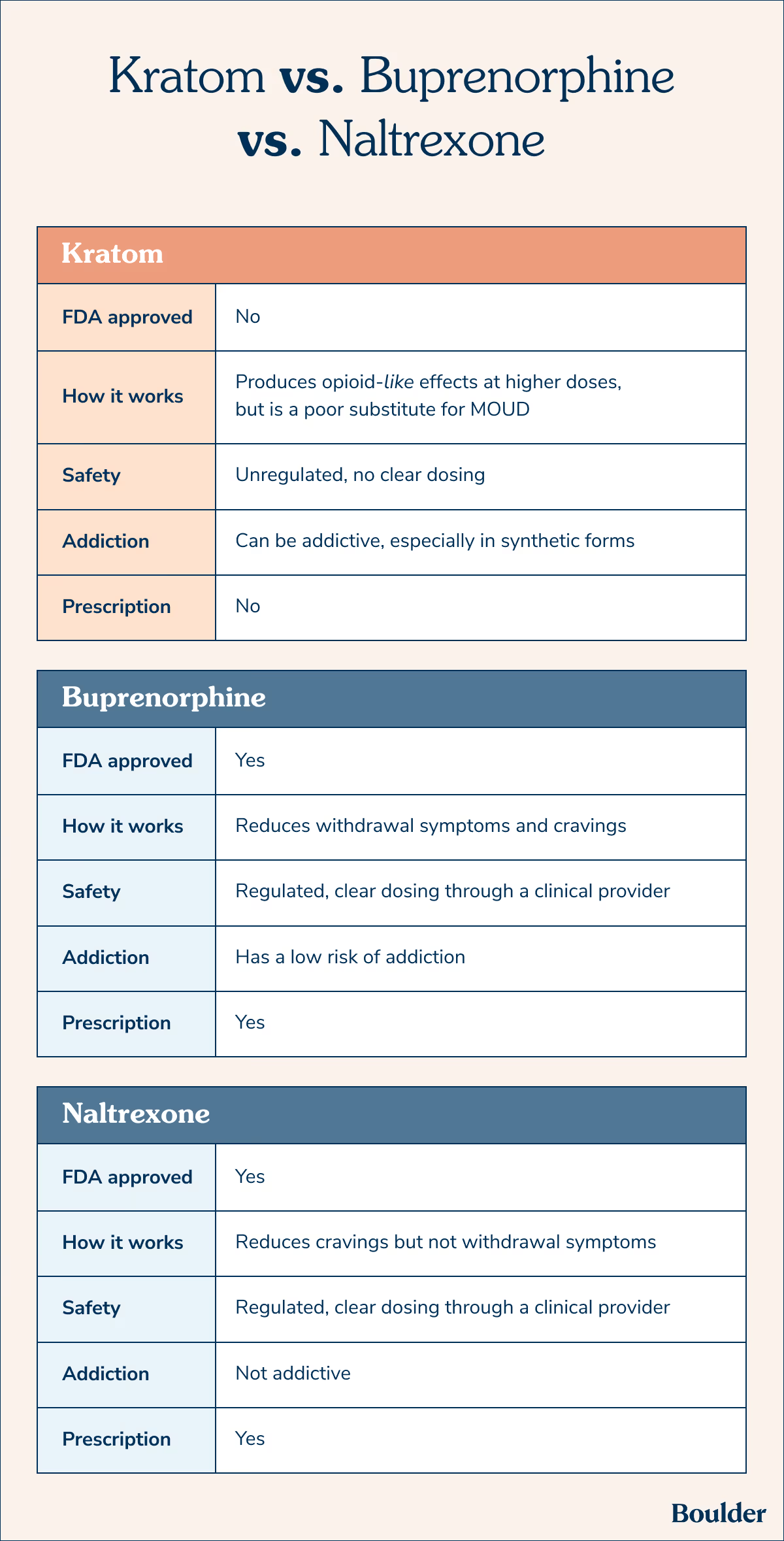
  • Medications for Opioid Use Disorder (MOUDs), such as buprenorphine and naltrexone, are much safer than kratom.

From health food stores to gas stations, the “natural supplement” kratom seems to be everywhere—marketed as a remedy for anxiety, energy boosting, and pain relief. Some people even swear by it for opioid withdrawal and opioid use disorder treatment, choosing it over FDA-approved Medications for Opioid Use Disorder (MOUDs) like buprenorphine and naltrexone.

But the truth is, kratom can be dangerous. Despite being plant-derived, it's an unregulated substance often sold in synthetic form, called "7-OH", and there's no reliable way to verify the dose. It can activate your brain’s opioid receptors, which could provide temporary relief for opioid withdrawal symptoms, but brings significant risk of addiction itself.

"Walk into a vape shop, a gas station, or browse online, and you'll find products labeled 'kratom extract,' sold as gummies, shots, chewable tablets, or candy. Many of these are not kratom," says Dr. Shannon Boustead, an addiction medication physician at Boulder Care. But be it synthetic or natural, all forms of kratom have risks.

So what exactly is kratom, and is it ever safe to use? Below, we break down the risks, explore alternatives, and look at how to get support for addiction.

Our program is based on your goals, not our rules.
Whether you want to reduce use or stop altogether, your care team has your back.
Learn more about Boulder

What is kratom?

Kratom, in its naturally derived form, comes from the leaf of a tree from Southeast Asia: Mitragyna speciosa. It is part of the Rubaceae family and contains over 40 psychoactive alkaloids.

Kratom has two main ingredients: Mitragynine (MP) and 7-hydroxymitragynine (7-OH). In natural kratom, 7-OH only appears in trace amounts—about 0.05% or less. 

However, commercially sold kratom is typically synthetic, with a much higher 7-OH potency compared to the original leaf. This form of Kratom is typically called “7-OH” itself, and is sold as capsules, drinks, dietary supplements, powders, teas, vapes, and gummies. 

“Products in vape shops have been found to contain 7-OH at levels 22 to 75 milligrams per gram—concentrations only achievable through synthetic chemical conversion,” says Dr. Boustead. “Lab analysis confirms these products lack the full alkaloid profile of real kratom and contain unidentified compounds not present in the leaf at all.”

What type of drug is Kratom?

Kratom is a plant-based substance that can create similar effects to both opioids and stimulants. So, what is kratom classified as? It currently has no official drug classification and is not on the US schedule of controlled substances. However, the US Drug Enforcement Administration (DEA) has labeled kratom a “drug of concern.” 

While technically not an opioid—though some authorities have labeled it so—it works similarly in the brain. Both MP and 7-OH activate the brain’s opioid receptors, mimicking the effect of opioids. Research also shows that MP might bind to adrenergic, dopamine, and serotonin receptors, potentially causing arousing effects. 

“Kratom is itself an opioid agonist,” says Dr. Boustead. “Its primary active compound, mitragynine, and its metabolite 7-hydroxymitragynine, bind to the same receptors activated by heroin, oxycodone, and fentanyl. That’s why it can reduce withdrawal symptoms. It’s also why it carries a real risk of physical dependence.”

Kratom is not FDA-approved and the FDA actively warns consumers not to take kratom due to risks such as substance use disorder, liver toxicity, and seizures.

Get the medication you need, and the support you deserve.
We provide FDA-approved medications for alcohol and opioid addiction — and support services to help you stay on track and reach your recovery goals.
Learn more about our services

What is kratom used for?

In 2021, approximately 1.7 million people across the US self-reported using kratom over the last year. That figure represents about 0.6% of people nationwide. 

Despite no FDA-approval, some people use kratom to manage symptoms such as:

  • Substance withdrawal and cravings 
  • Pain
  • Fatigue
  • Adverse mental health 

Kratom sellers often offer different strands of the substance with unique names and claims of varying effects or properties. However, some research has found these strands to have little biological variety and these labels are considered to mostly be a marketing ploy. Kratom products are completely unregulated so there’s no need for sellers to back up their claims.

Does kratom get you high?

Yes, kratom can get you high, with effects coming on within minutes and lasting a few hours. It might create a similar feeling to opioids, as it binds to the same opioid receptors in the brain. This connection can provide you with a sense of euphoria and an overall improved mood. 

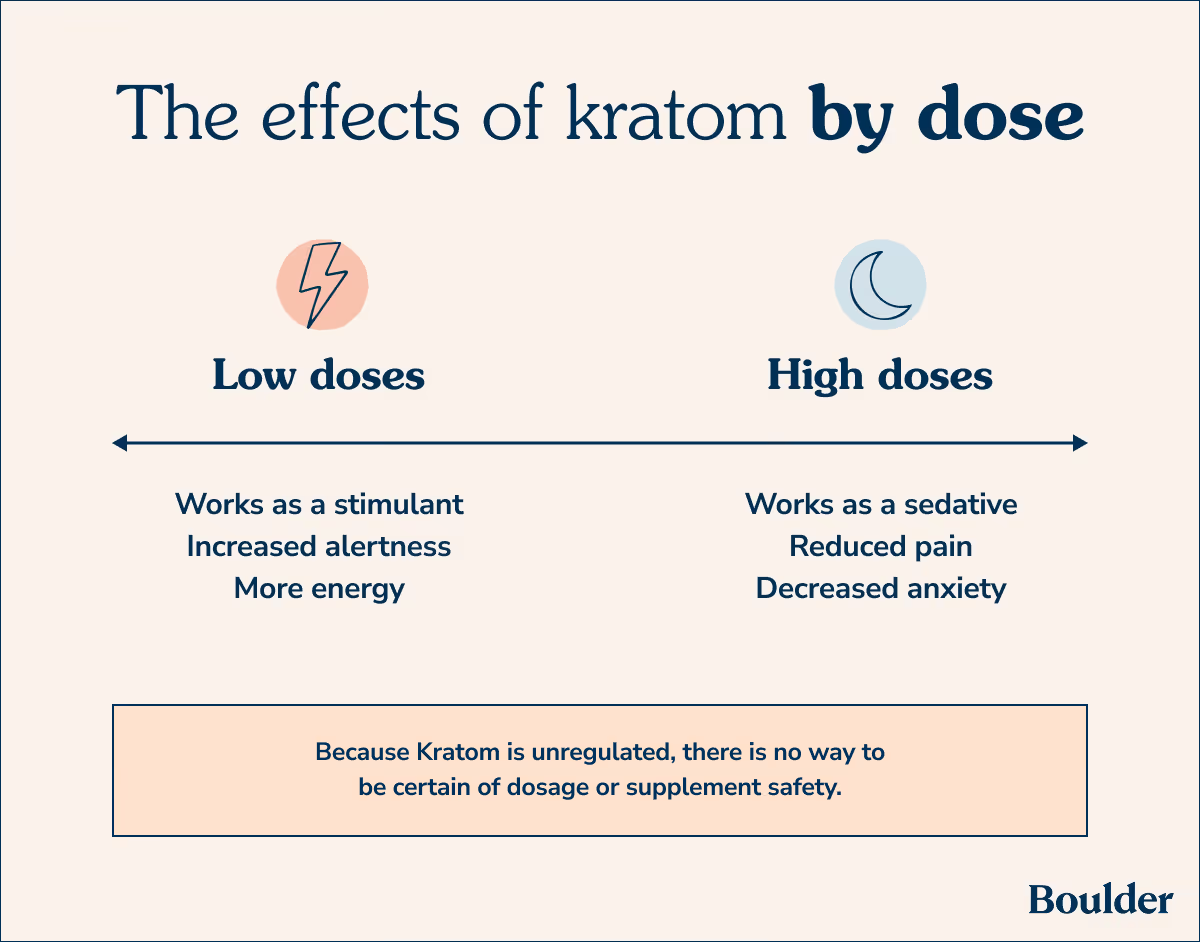
Kratom works differently depending on the dose. Low doses of kratom might feel like a stimulant. Taking it at low doses might make you more alert or energized. In contrast, high doses of kratom can act like a sedative. High doses of kratom might make you feel less anxious, reduce your pain, or give you a greater sense of calm. 

However, it’s difficult to get the dose you want. “Because kratom is unregulated, the dose you think you’re taking may not be what you’re actually getting. This makes it genuinely difficult to use safely, even with good intentions,” says Dr. Boustead.

Researchers are still working to understand the effects of kratom. But, like opioids, you might experience increased tolerance with continued use. “Tolerance develops, meaning the same dose produces diminishing effects over time,” says Dr. Boustead. “The experience also varies considerably between people. Genetics, body composition, other medications, and the specific alkaloid content of the product all influence how kratom feels for any given person.”

Can kratom help with opioid withdrawal?

Kratom is sometimes used to self manage opioid withdrawal, but is not recommended. Kratom is completely unregulated, has no FDA approval, and comes with exceptional risks. “Kratom is not a neutral or risk-free alternative to opioid use disorder treatment,” says Dr. Boustead.

Some people might take kratom because it is easier to get than an FDA-approved prescription medication. But using kratom to help with opioid withdrawal can come with serious risk of dependency and uncertainty around what you’re actually taking. You might instead develop the same withdrawal symptoms as before, just this time due to kratom. 

Safe, effective, FDA-approved options are preferred: Buprenorphine, naltrexone, and methadone are each available as prescriptions for treating opioid use disorder. 

These medications have been rigorously tested, and are highly regulated. They are prescribed by a medical provider who will take care to ensure you are taking the correct dose, help you manage any side effects, and ensure you’re getting well-rounded treatment including therapy, support groups, and more.

What are the risks and side effects of taking kratom?

Kratom can cause a number of health risks and side effects. 

Risks of kratom

Kratom comes with a series of risks, including dependence, withdrawal, overdose, and even death. We’ll dive deeper into the addiction and withdrawal aspects further on in this article, but it’s worth stating again and again that a huge risk of taking kratom is developing a dependence.

Not only can taking kratom regularly lead to addiction, but stopping it can cause opioid withdrawal symptoms, such as nausea, restlessness, and abdominal pain. Yes, you might use kratom to help with opioid withdrawal, but it can then mimic the same withdrawal symptoms. These symptoms can occur within 12 to 48 hours after stopping use, but typically continue for one to three days—or up to a week.

Fatal overdoses involving kratom are increasing. In 2016, kratom was involved in 0.5% of deaths related to opioids, but that number rose to 2% in 2022. 

Kratom use has also been linked to instances of neonatal abstinence syndrome, a condition typically caused by opioid exposure in the womb. Babies experiencing this can be born with withdrawal symptoms such as muscle stiffness and jitteriness. 

Due, in part, to the unregulated nature of kratom, it’s not always clear what you’ll actually get. Some products have been contaminated with Salmonella and heavy metals, for instance. “What’s on the label may not match what’s in the bag. Potency varies dramatically between products, batches, and vendors,” says Dr. Boustead. “You are essentially self-experimenting without reliable dosing information.” 

Side effects of kratom

On top of these risks, kratom can also cause a range of side effects, such as:

  • Dry mouth
  • Nausea 
  • Vomiting
  • Constipation
  • Muscle pain
  • Dizziness
  • Drowsiness

Kratom can also bring a range of serious side effects, including:

  • High blood pressure
  • Weight loss
  • Depression
  • Hallucinations
  • Delusions
  • Trouble breathing
  • Liver damage
  • Confusion
  • Tremors and seizures

Is kratom addictive?

Yes, kratom can be addictive and could potentially develop into a substance use disorder. You might meet criteria such as using kratom for longer or more than expected, experiencing cravings for it, growing a tolerance to it and increasing dose, and continuing to use it despite adverse consequences. 

The 7-OH ingredient in kratom can bind to opioid receptors and, when stopped, cause withdrawal symptoms. “These products are, for practical purposes, synthetic opioids being sold in a candy aisle without age restrictions,” says Dr. Boustead.

Stopping kratom can cause you to enter withdrawal. Kratom withdrawal symptoms include:

  • Jerky movements of the limbs
  • Disturbed sleep
  • Loss of appetite
  • Nausea
  • Vomiting
  • Abdominal pain and cramping
  • Watery eyes
  • Runny nose
  • Hot flashes
  • Sweating
  • Diarrhea
  • Tremors

Kratom withdrawal symptoms can also affect your psychological and emotional state. You might experience things such as:

  • Cravings
  • Restlessness
  • Anger
  • Nervousness
  • Depression
  • Tension
  • Sadness

“Kratom withdrawal is real, can be prolonged, and doesn’t always respond as predictably to standard treatments,” says Dr. Boustead. “I have had patients who found getting off kratom harder than getting off heroin. That’s not universal, but it’s not rare either.”

There are safer options available to help you reduce opioid use. FDA-approved MOUDs like buprenorphine provide regulated support and don’t have the same risks. Notably, Suboxone, a prescription buprenorphine formulation, has been shown to help with kratom withdrawal

Yet, kratom, which can be bought without a prescription or even visiting a medical provider, might feel easier to access than MOUDs. “Many people who turn to kratom are doing so because the systems that should have helped them didn’t—or because the stigma attached to formal treatment felt insurmountable,” says Dr. Boustead. “They’re trying to take care of themselves with what’s available. That deserves respect, not dismissal.”

Dr. Boustead continues: “At the same time, I’ve watched kratom create new problems for people who were trying to solve existing ones. The gap between ‘this helped me get through withdrawal’ and ‘now I can’t stop and getting off it is harder than I expected’ is often smaller than people anticipate. And the landscape is now more complicated by an emerging class of synthetic products that are far more dangerous than traditional kratom but are being sold under the same name.”

What states is kratom legal in?

The legality of kratom varies across the United States. The American Kratom Association (AKA) is lobbying states to legalize kratom and claims the FDA has a “war on kratom.” The association advocates for the Kratom Consumer Protection Act (KCPA), which legalizes kratom with restrictions such as a minimum age. The KCPA has now been enacted in about one-third of states. 

Notably, the AKA points to multiple published studies which are written by employees of or supported by organizations that profit from legalizing dietary ingredients and supplements. 

It’s illegal to buy, sell, possess, or use kratom in the following states:

  • Alabama
  • Arkansas
  • Indiana
  • Rhode Island 
  • Vermont
  • Wisconsin

In recent years, some of these states have introduced bills to regulate, rather than outright ban kratom. Of the states where kratom is legal, some have certain regulations, such as restrictions for ages or in specific cities—whether through the KCPA or other laws. Check out your local government website for the most up-to-date information on kratom laws in your area.

When to seek medical support with kratom

Immediately seek medical care if you experience any of the above signs of kratom withdrawal. 

If you’ve become addicted to kratom then there are ways to get support. You can contact a trusted medical professional or a substance use disorder clinic. Let them know how much kratom you’ve been taking and any symptoms you’re experiencing while on it and if you stop use. 

You deserve judgment-free care that will support you and not shame any return to use. Kratom addiction treatment might include working with a medical provider to manage kratom withdrawal and taper use of the substance. It also might involve using MOUDs like Suboxone to reduce negative effects. 

Separately, it’s a good idea to carry naloxone—also known as Narcan—if you or someone else is taking kratom. “Naloxone fully reverses 7-OH toxicity, because 7-OH acts like a classical opioid,” says Dr. Boustead. “It does not reliably reverse the effects of traditional kratom. If you carry naloxone and use these products, it will likely work in an emergency. If someone you know uses kratom—traditional or extract—having naloxone on hand is still a reasonable precaution, especially if other substances are also present.”

The bottom line

Kratom is widely sold with no regulations and a lot of risks. It can feel like an easier option for treating opioid withdrawal than FDA-approved medications. But, it brings with it a host of problems from uncertainty about doses to addictive properties. 

It might be helpful at times, but the typically synthetic “kratom” with higher 7-OH levels is available as gummies, teas, and more is dangerous. As Dr. Boustead says, “If you’re using kratom and it’s working for you, I’d ask you to be honest with yourself about a few things: How often are you dosing? Has that frequency increased over time? Are you using powder and capsules, or extracts and gummies? Can you take a day off without feeling sick?”

Taking FDA-approved, regulated treatment for opioid use disorder under the guidance of a medical professional is the best course to take. 

Boulder Care is one option for getting accessible, understanding care that’s available online (call 866-901-4860). “If you haven’t tried FDA-approved treatment and cost or access has been the barrier, that barrier is smaller now than it’s ever been,” says Dr. Boustead. “Telehealth-based buprenorphine care is available in most states, often with same-week appointments, and options for low- or no-cost care exist.”

Frequently Asked Questions

Can you overdose on kratom?

Yes, it’s possible to overdose on kratom—though it can also be one of multiple substances in a person’s system. Fatal overdoses involving kratom are increasing. In 2016, kratom was involved in 0.5% of deaths related to opioids, but that number rose to 2% in 2022. 

Carrying naloxone (Narcan) can help keep you and people around you safe in the case of an overdose. 

Is kratom legal in my state?

Kratom’s legality and rules vary state to state. Some states ban it outright, some have an age minimum for purchase, and others have no restrictions. You can learn more about each state’s laws here

Does kratom make you buzzed? 

Kratom can make you feel high or buzzed, producing a sense of euphoria or mellowness. It works similar to opioids, binding to opioid receptors in your brain to produce this effect. However, the impact of kratom depends on dosage.

On-demand, online addiction care from home — on your terms.
Access our care team directly through an app on your phone.
Get started in the Boulder Care app

Editorial Policy

At Boulder Care, we’re committed to providing clear, evidence-based information about opioid and alcohol use disorder recovery. Learn more about our editorial standards and medical review process.